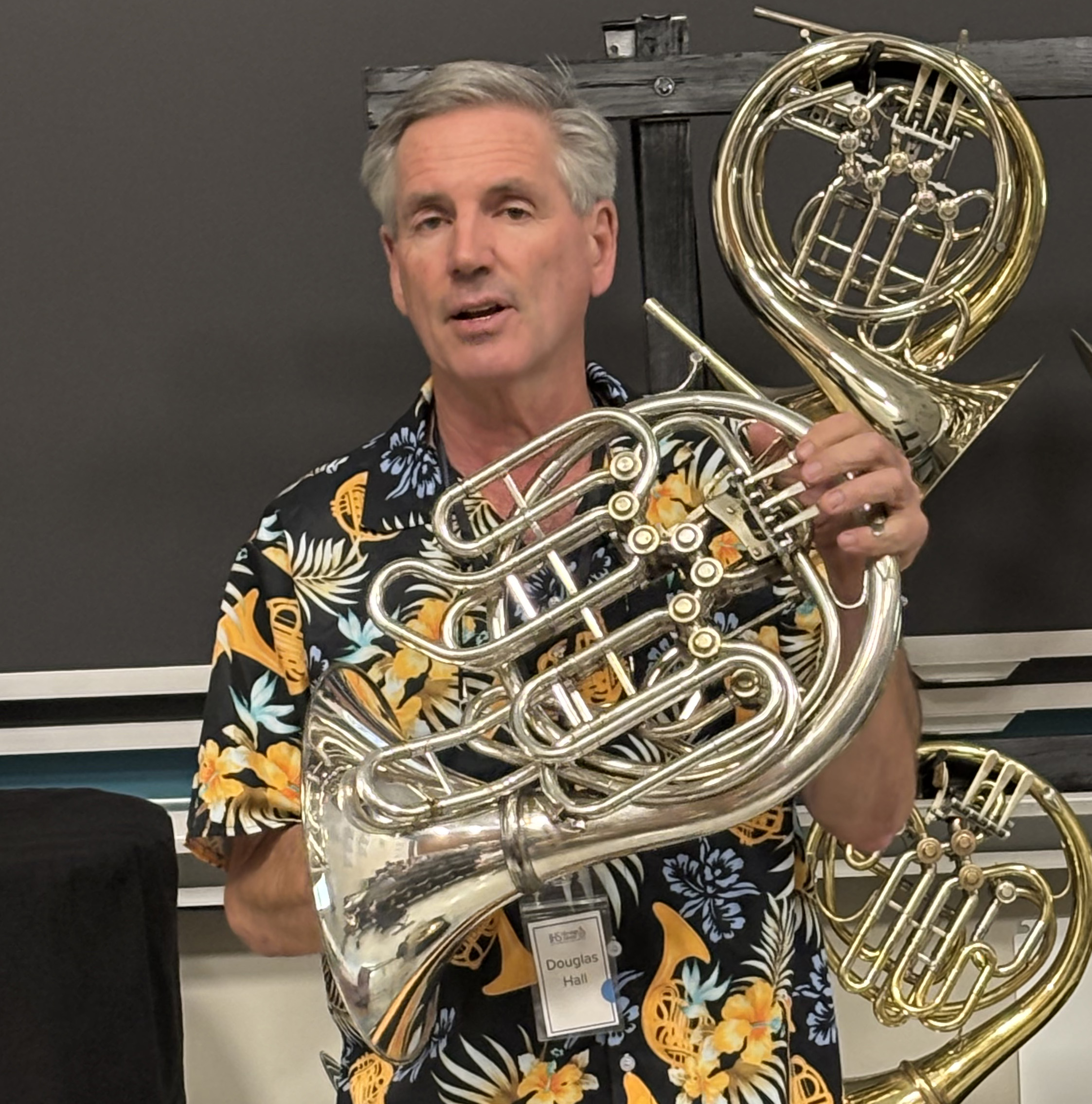
Tom English had known George McCracken since his residency at Case Western Reserve, and his first serious horn was an Eroica. Over the years George built three horns for him, including this double valve double, which English regarded as the best all-around keeper of the group.
He also owned a single B-flat bivalve, a modular Eroica/Fidelio, and a piston-valve horn with a rotary change valve. In his recollections, he described the double bivalve as a particularly effective orchestral instrument, with unusual power and presence:
“My double bivalve is great for most orchestral horn playing… If I had to sell all my horns and only keep one, it would be the bivalve double horn that George made for me. I love that horn.”
In another email, English remembered how forcefully it could project when needed:
“The bivalve double was so powerful I could make the rest of the horn section go away if I wanted to… However it was nice to be able to compete with the trumpets and trombones when the occasion arose.”
He noted that George no longer made bivalve horns and said he had heard several explanations for why, though he did not know the real answer. He also reflected on George’s unusual combination of engineering knowledge and creativity, and found it remarkable that George was still repairing and building horns at age 89. More broadly, English observed that horn making is never fully predictable: the same design can come out beautifully one time and disappoint the next.