Doug Hall shared the following account of this horn in 2025:
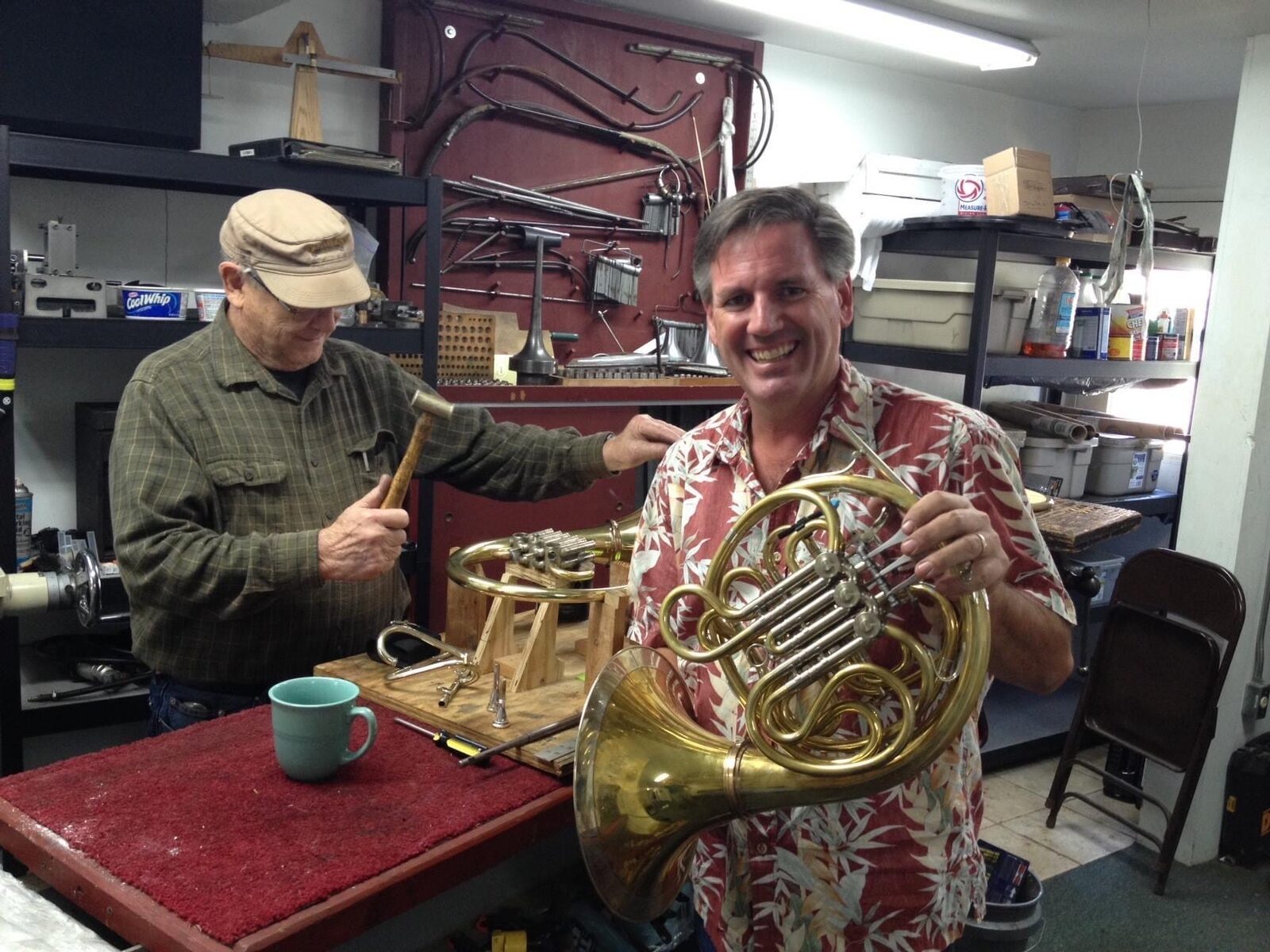
I began apprenticing with George McCracken in 1982, and continued throughout my thirty-six-year career with the San Diego Symphony. I witnessed his creativity, and was lucky to receive his mentorship. Throughout my playing career I was able to play many different horn makes and models.
Acting like Dr. Frankenstein in high school, I refurbished an 8D. I cut off the bell, replaced it with a Lawson bell flare, and added a McCracken leadpipe. These modifications expanded the horn’s capabilities. From then on, I was hooked on “horn surgery,” constantly seeking better sound and improved ease of play.
When I auditioned for the SDSO, I was playing a Conn 28D, which was a great horn. Not long after joining the SDSO, I saw an ad in the International Union paper, “horns for sale. Graham Page” of the Canadian Brass. An instrument built by Ron Pinc, a Knopf style horn, which I played for the better part of twenty years. (I had played this horn previously, when I was an usher at the Kennedy Center. Canadian Brass was performing, and Graham let me play it.)
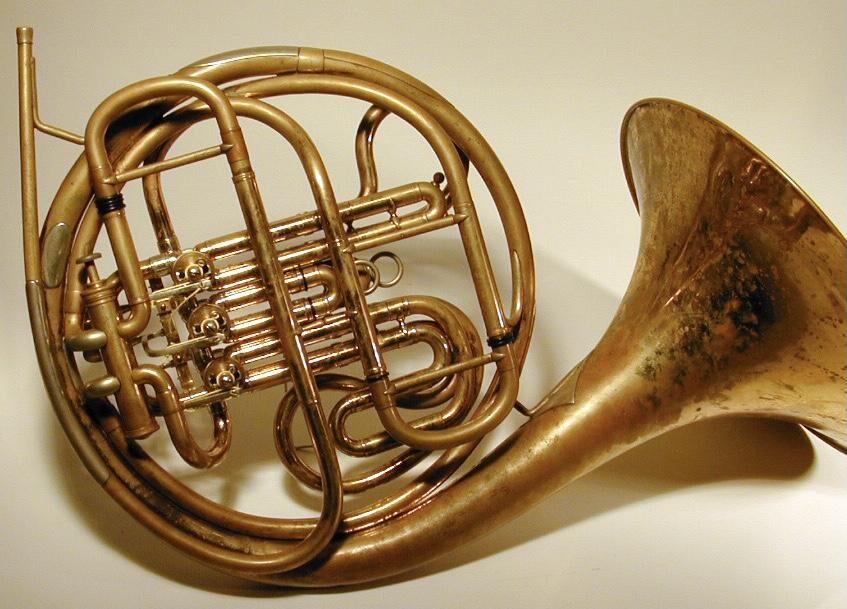
In 1996, I visited George and saw him building a horn for David O’Hanian. David wanted to reconfigure a Schmidt piston-change horn and asked George to move the piston valve to the middle of the body. I had the chance to play this horn and found it fantastic!
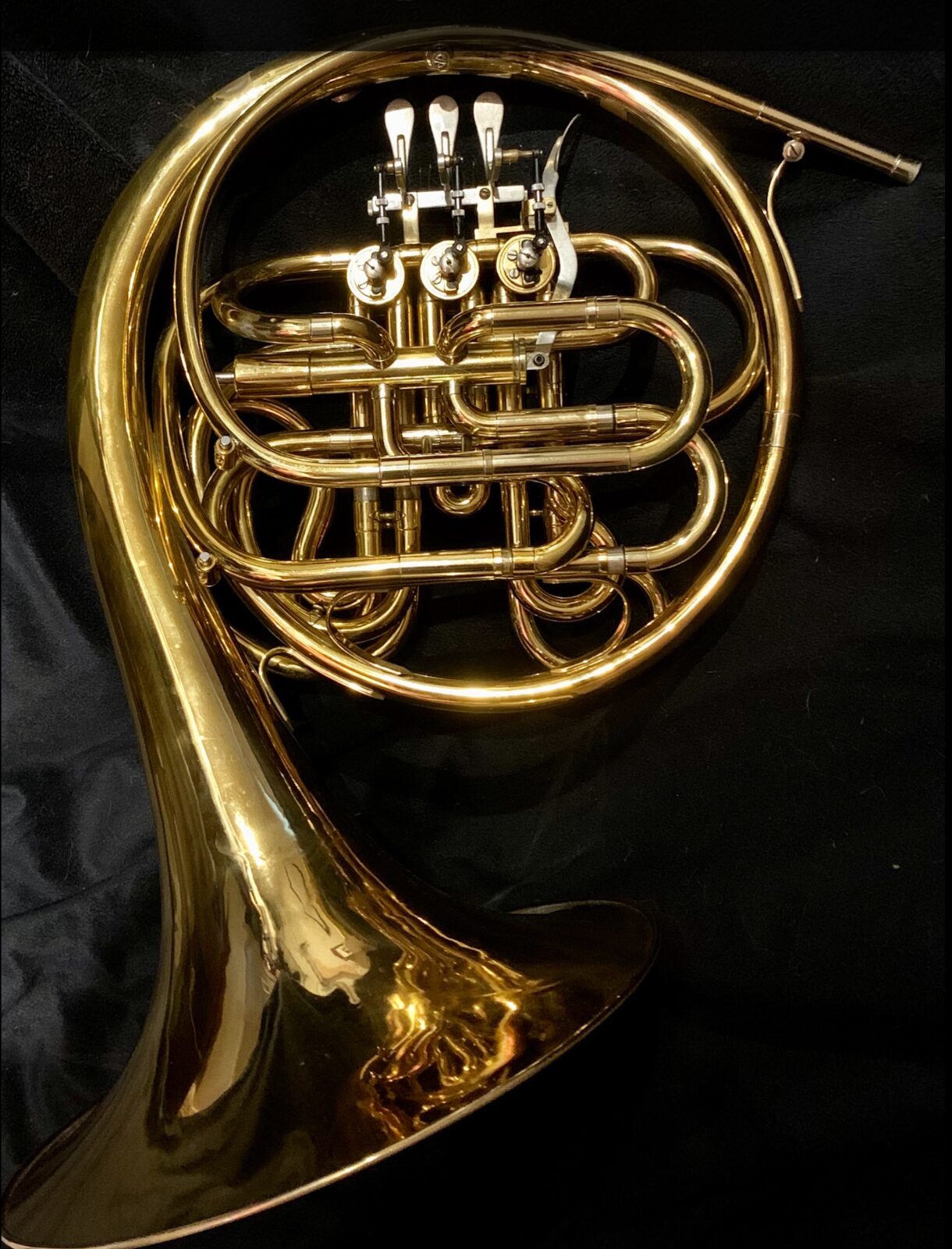
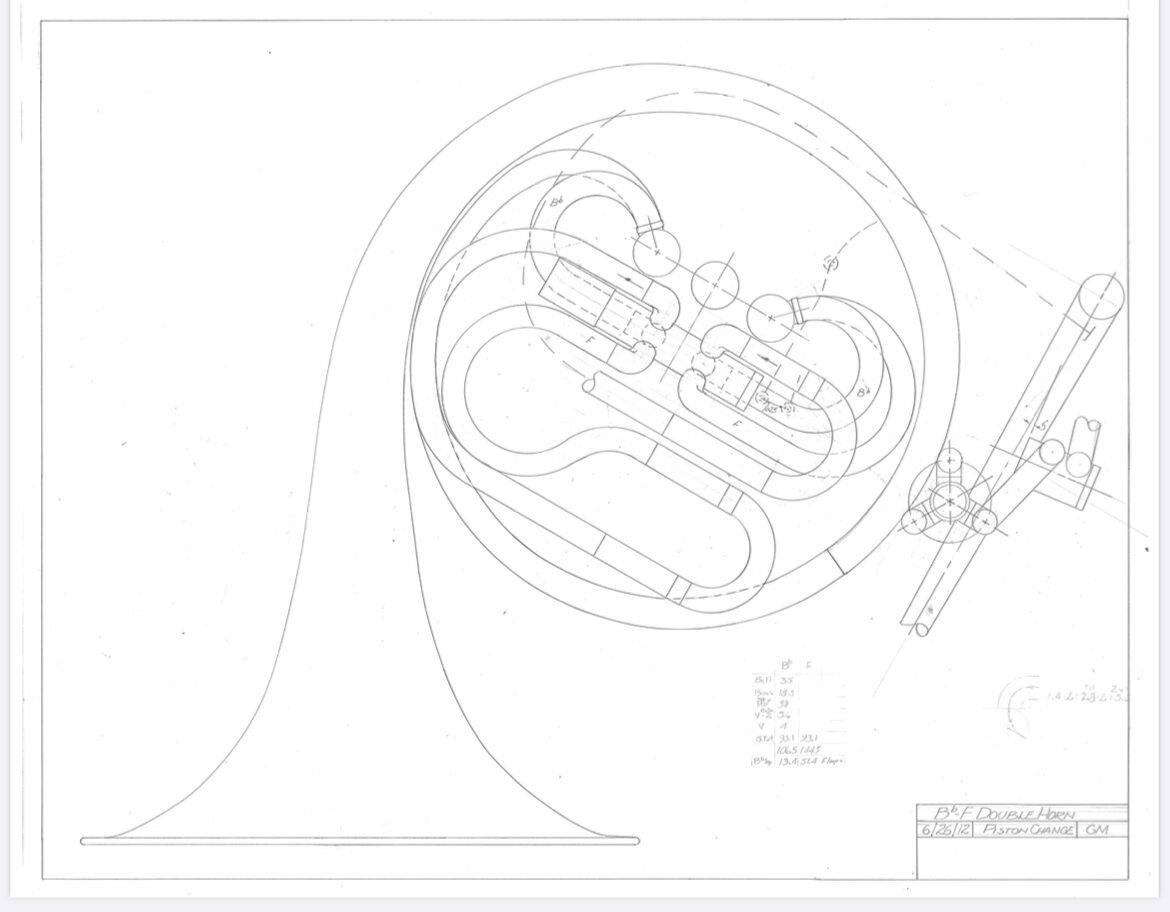
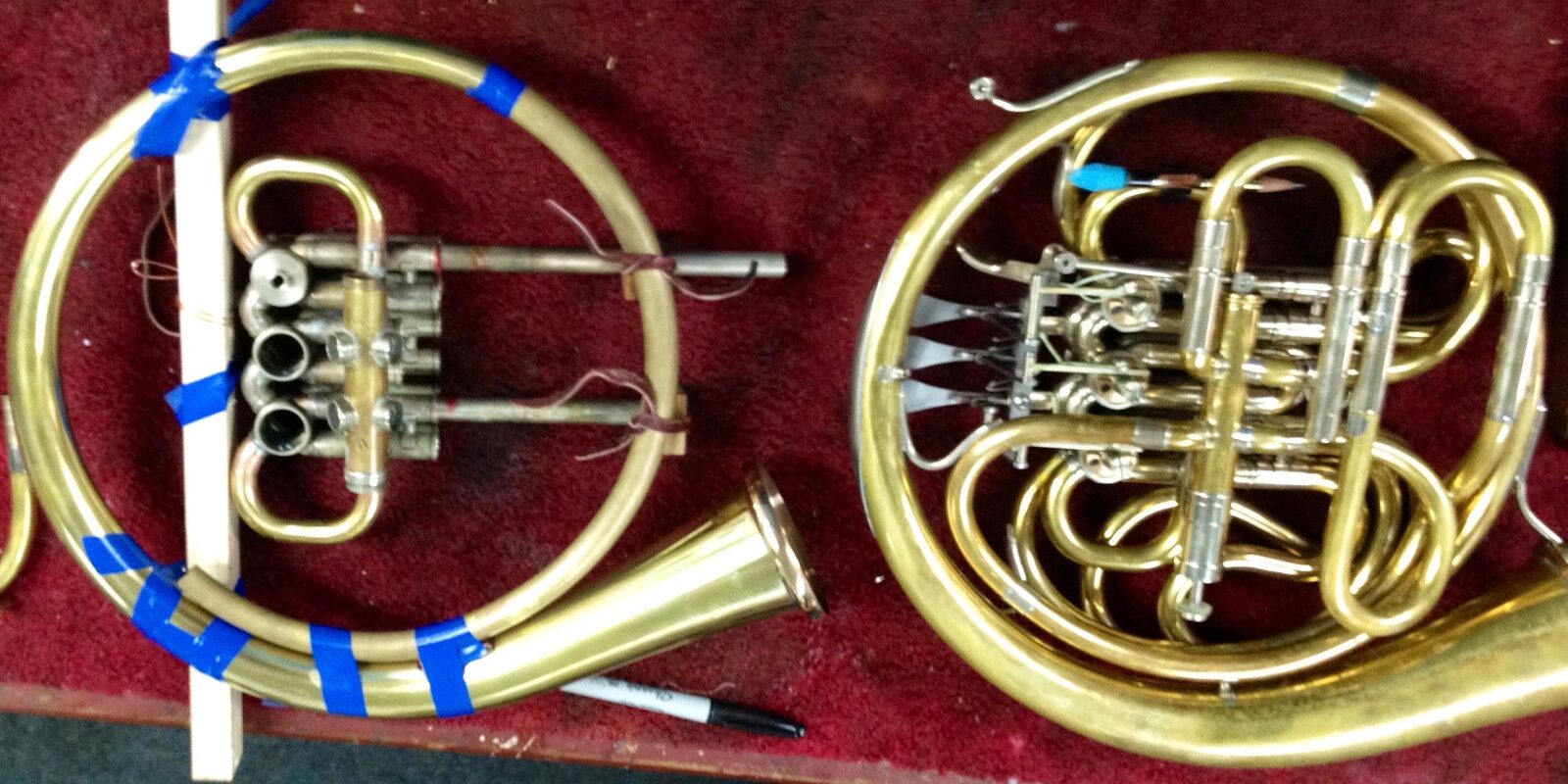
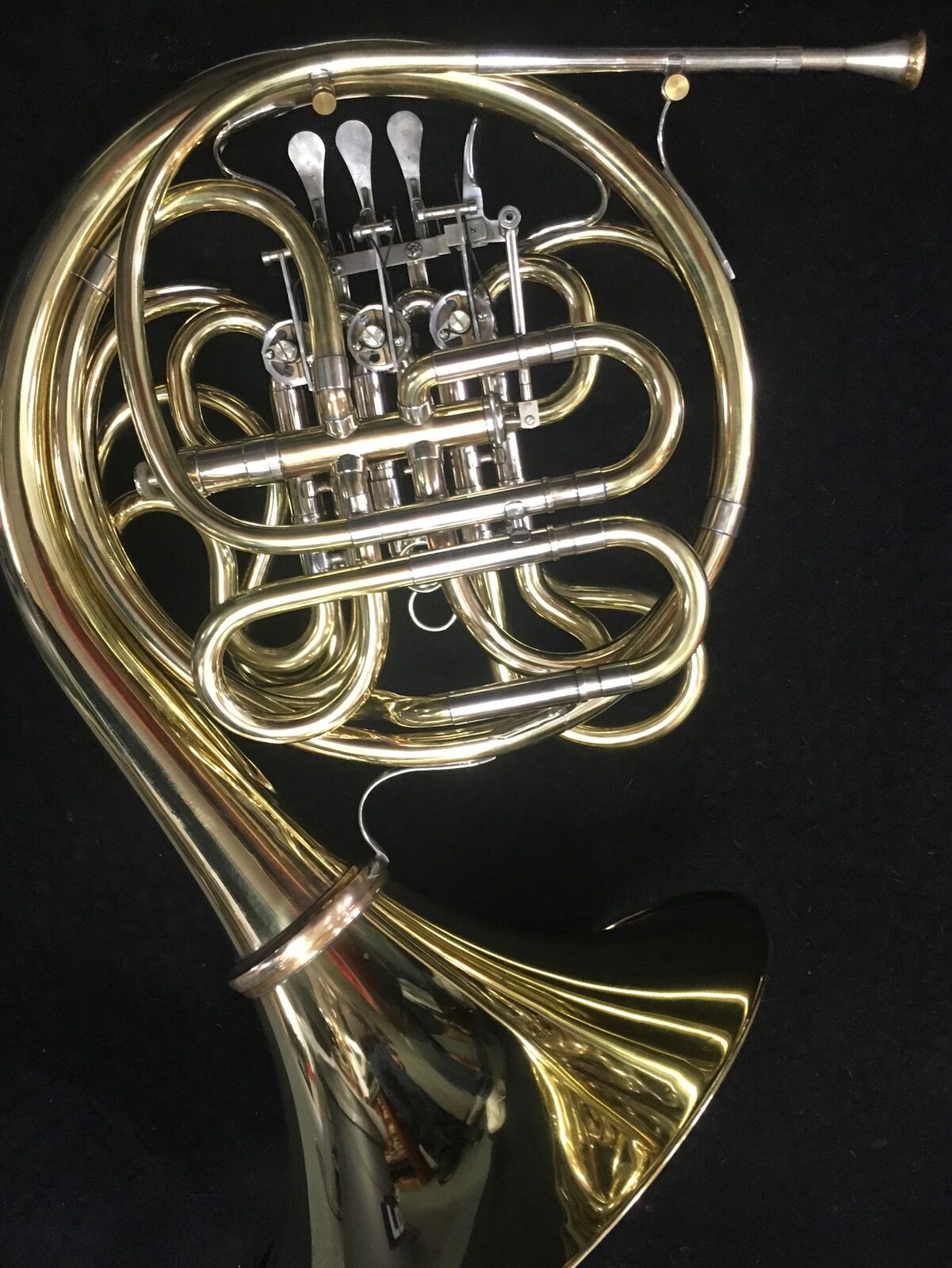
Years later, my wife Laura and I visited George again, and I asked him to help me create a piston horn similar to David’s. When George completed a preliminary draft of my piston horn, I decided to make two versions: one with a large bell and another with a medium bell. I chose to position the main tuning slide and the F tuning slide to resemble the Knopf/Geyer design. Using George’s tapers and valves, along with Sandner bells, we got to work. Furthermore, I ordered bell flares both with and without kranz.
I visited George whenever I could, often during June and September when the symphony was off, turning these trips into family road trips. Occasionally, I squeezed in visits during the SDSO season. The first horn took two years to complete because, whenever I left Virginia, the project went on the shelf.
Breaking in the first piston horn at the SDSO summer pops, I discovered that the non-kranz bell flares responded more quickly, making them the better choice. I also realized that the horn was slightly too long, so we trimmed about an inch from the main tuning slide and F slide. The piston change, like that of the Schmidt, smoothly transitions from F to Bb without any “pop” or resistance to airflow. George’s tapers beautifully matched the F and Bb horns.
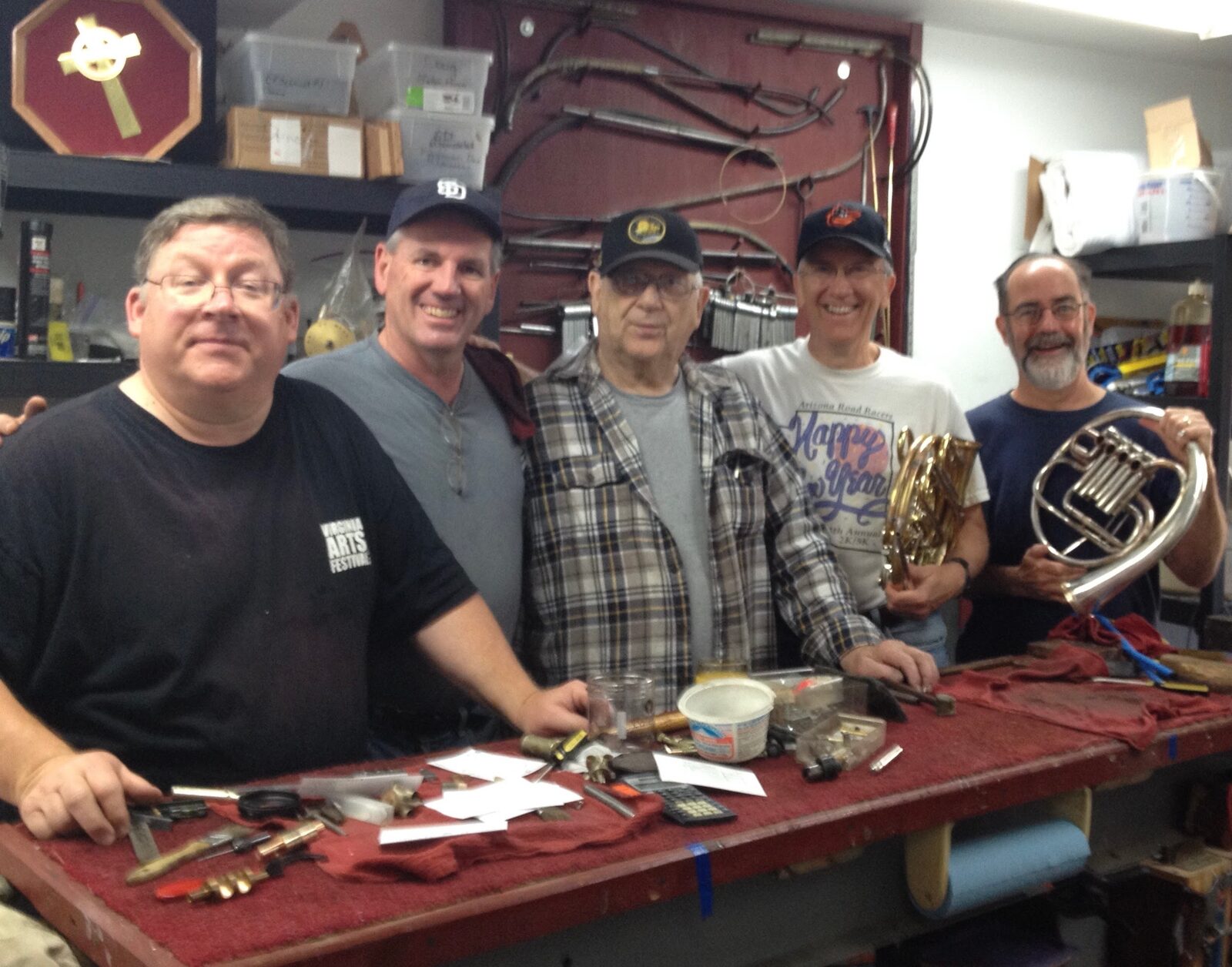
With any adventure, gratitude is due to many people. Thank you to George for being a great mentor and inspiring artist. Thanks to Martha McCracken for her memories. I am grateful to Bill and Kristie Holcombe for hosting me (and for cigar nights, horn choir, golf, great food, and Sunday family meals). Special thanks to David Adams, Ken Bell, Greg Beckwith, Joe Burton, Lou Denaro, Eric High, Nelson Lawson, Roger Nowak, Jonathan Parrish, Beth Torres, St. John’s Episcopal Church, and, most importantly, my wife Laura and daughter Valerie.
SchmidtO’Hanian piston conversionPreliminary drawingDoug’s piston hornsPiston hornLost boys, Bill Holcombe, Doug, George, Ken Bell, Roger Nowak