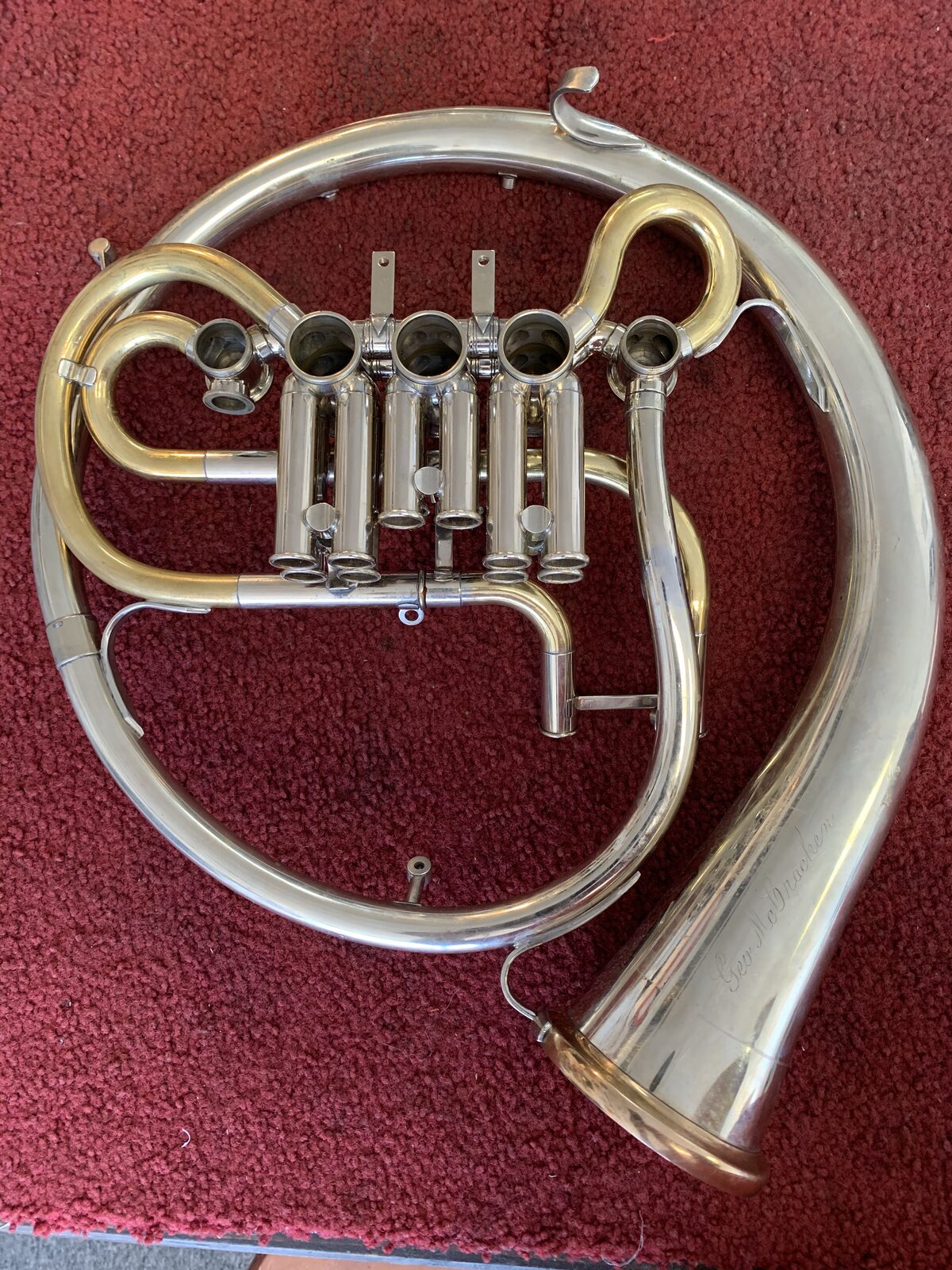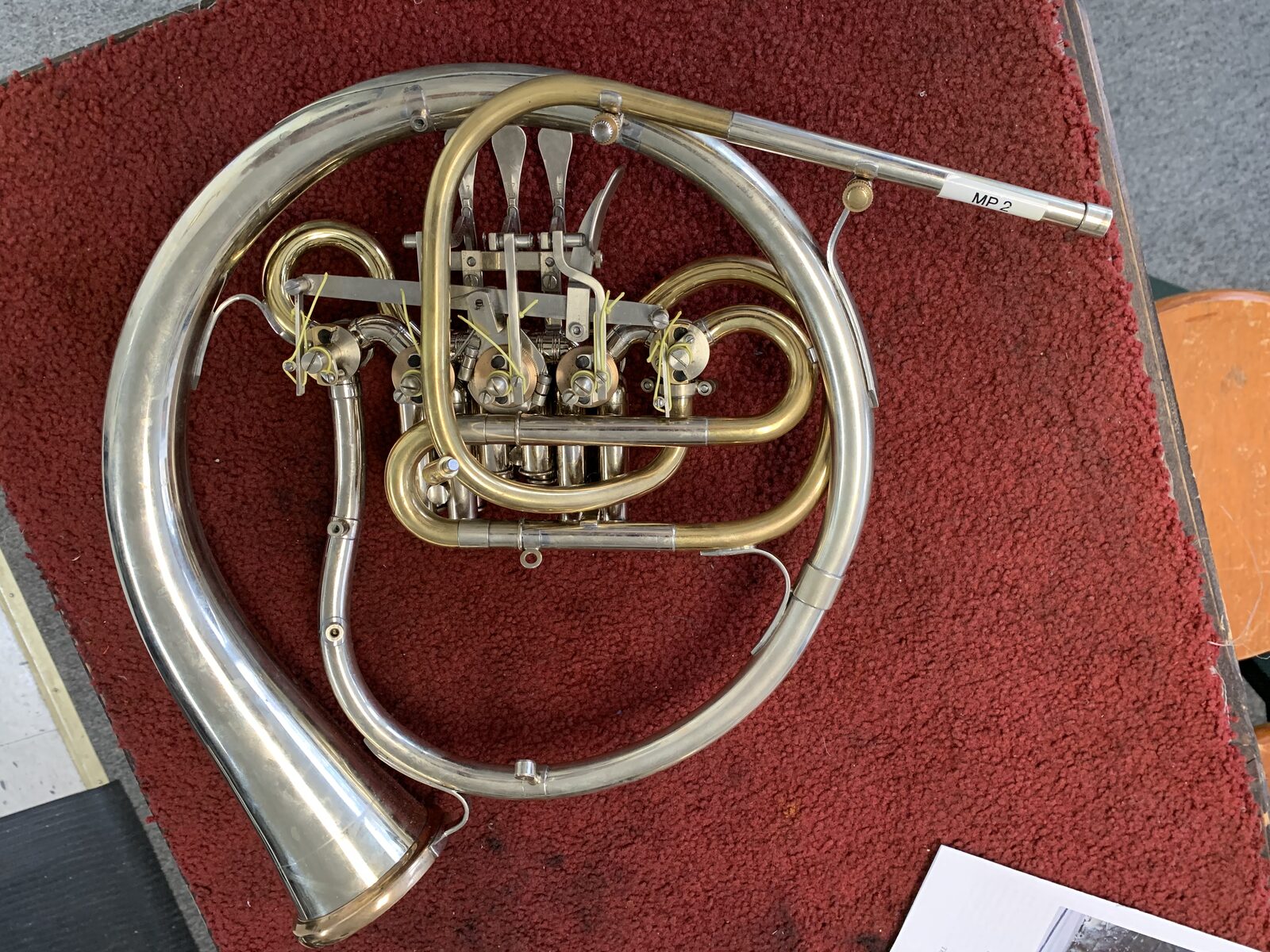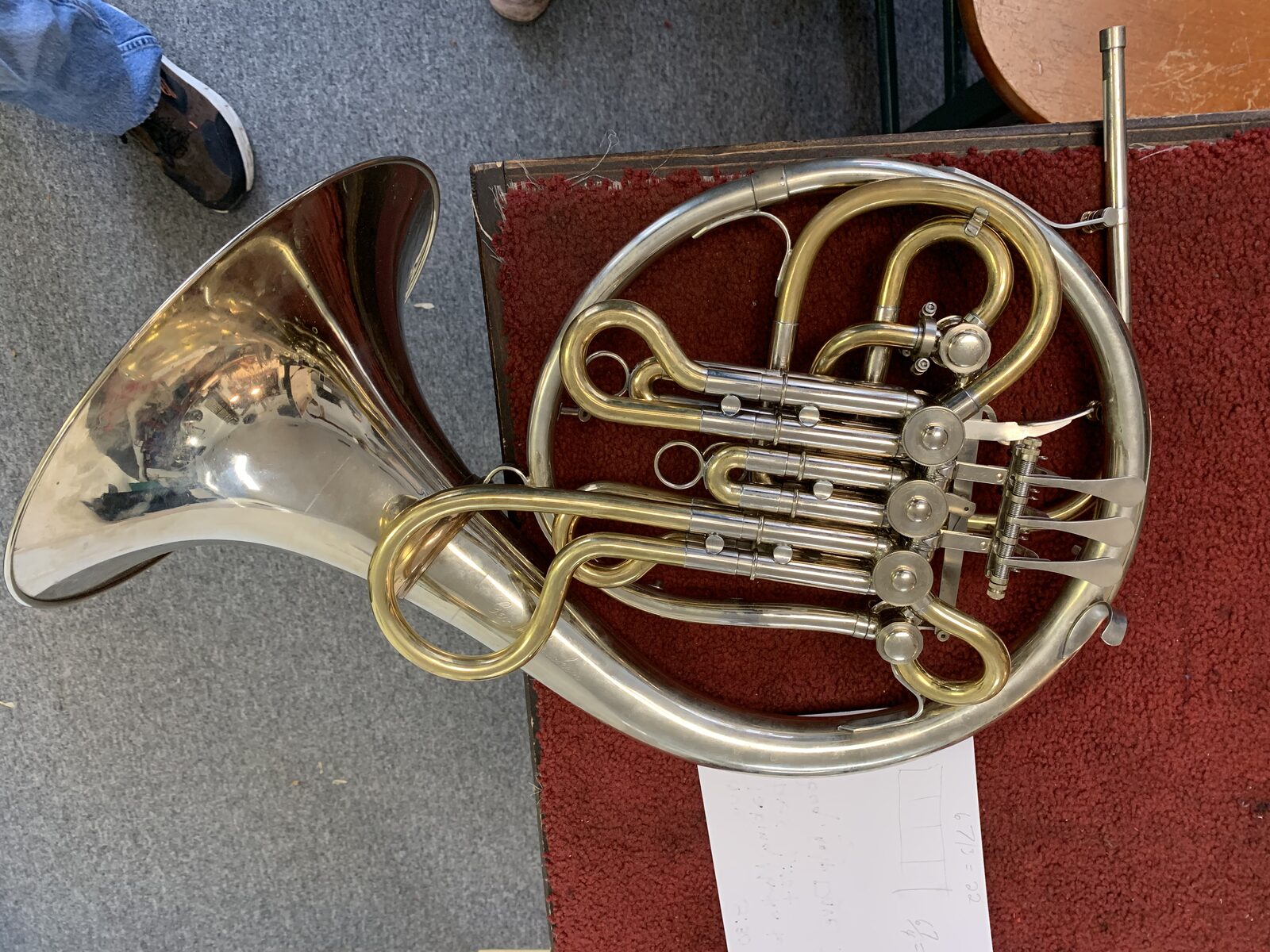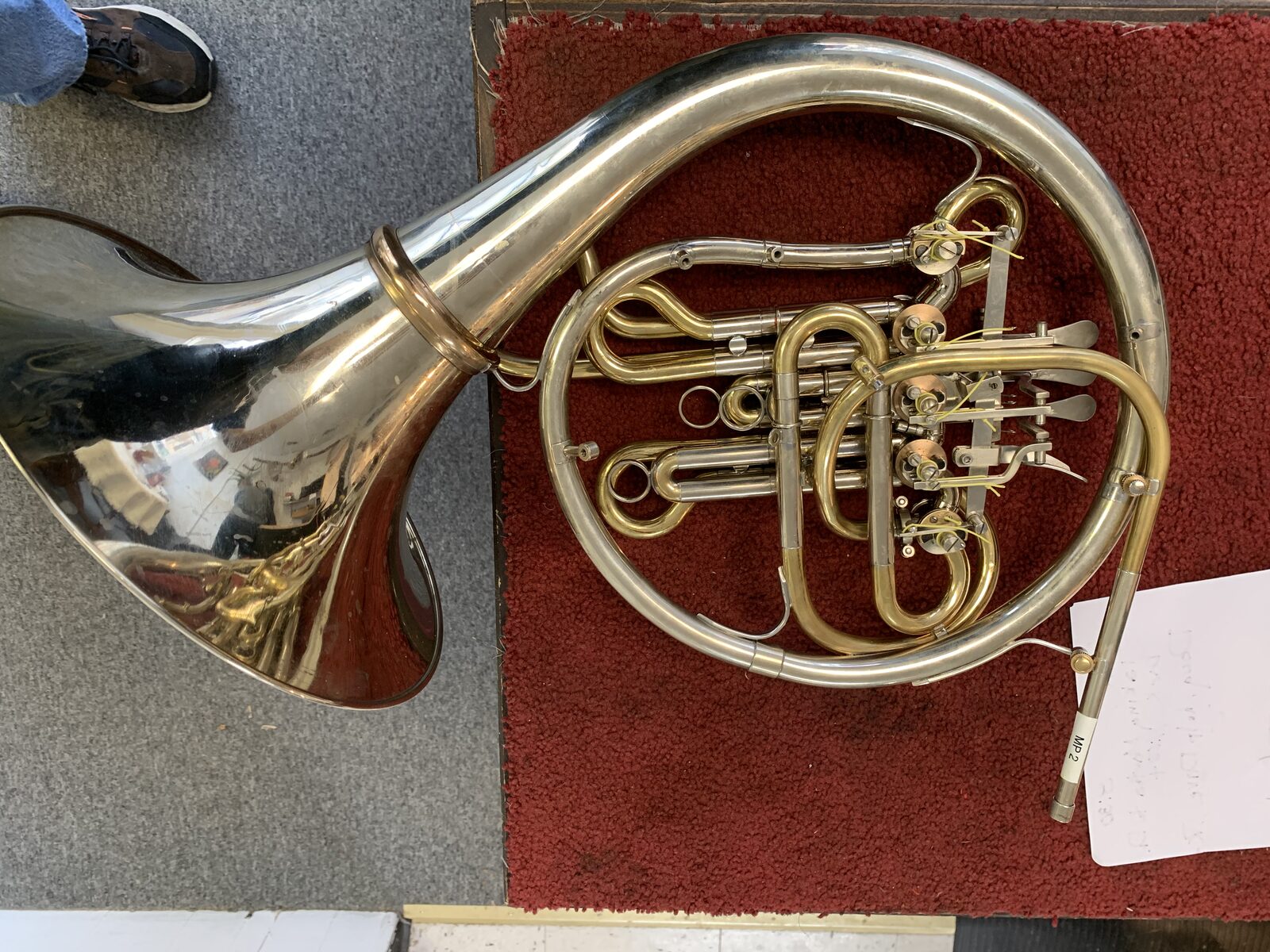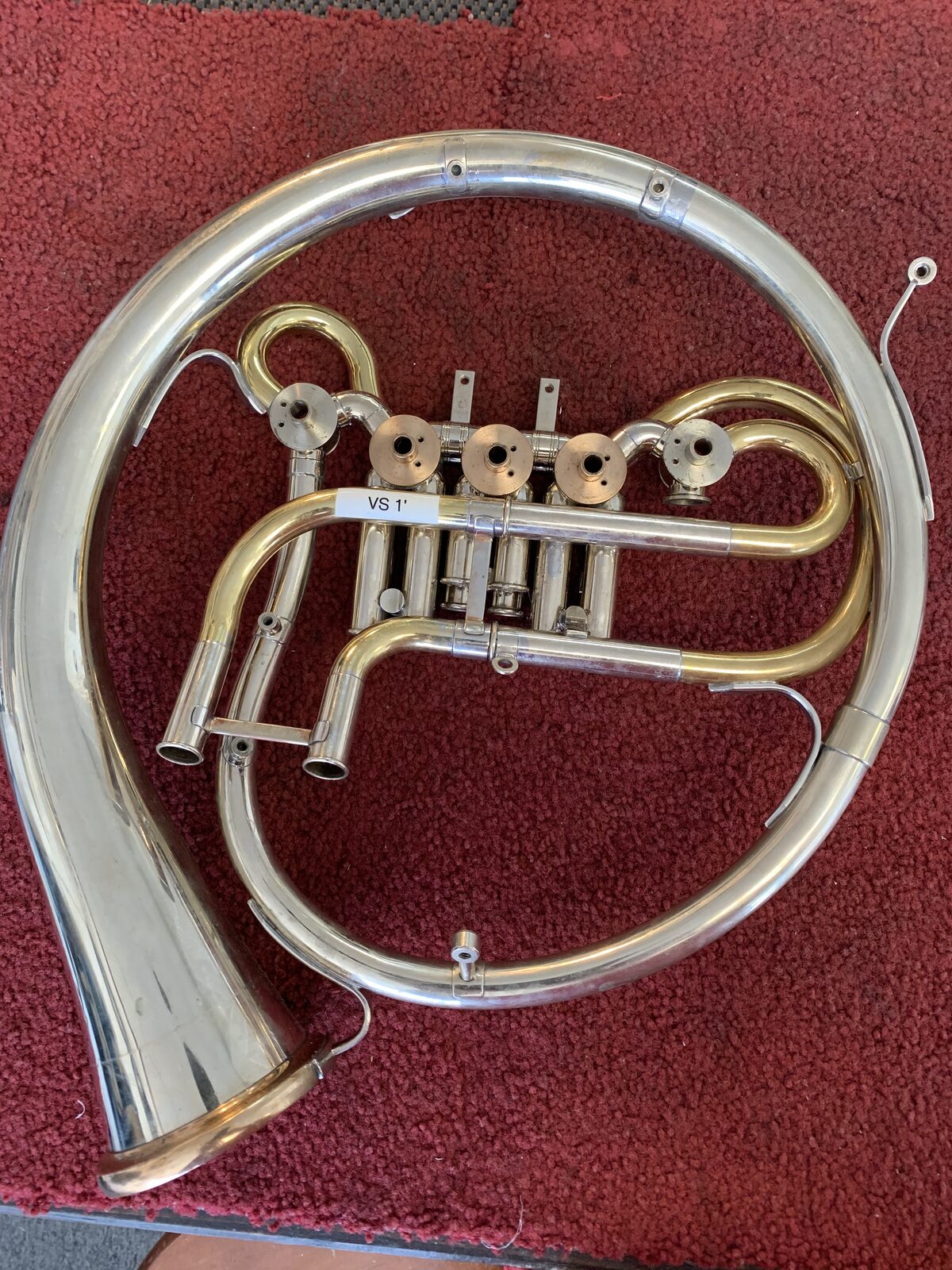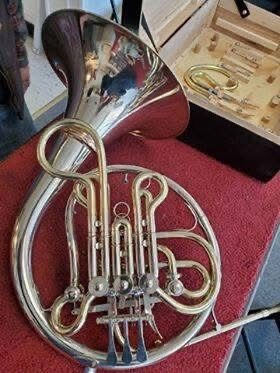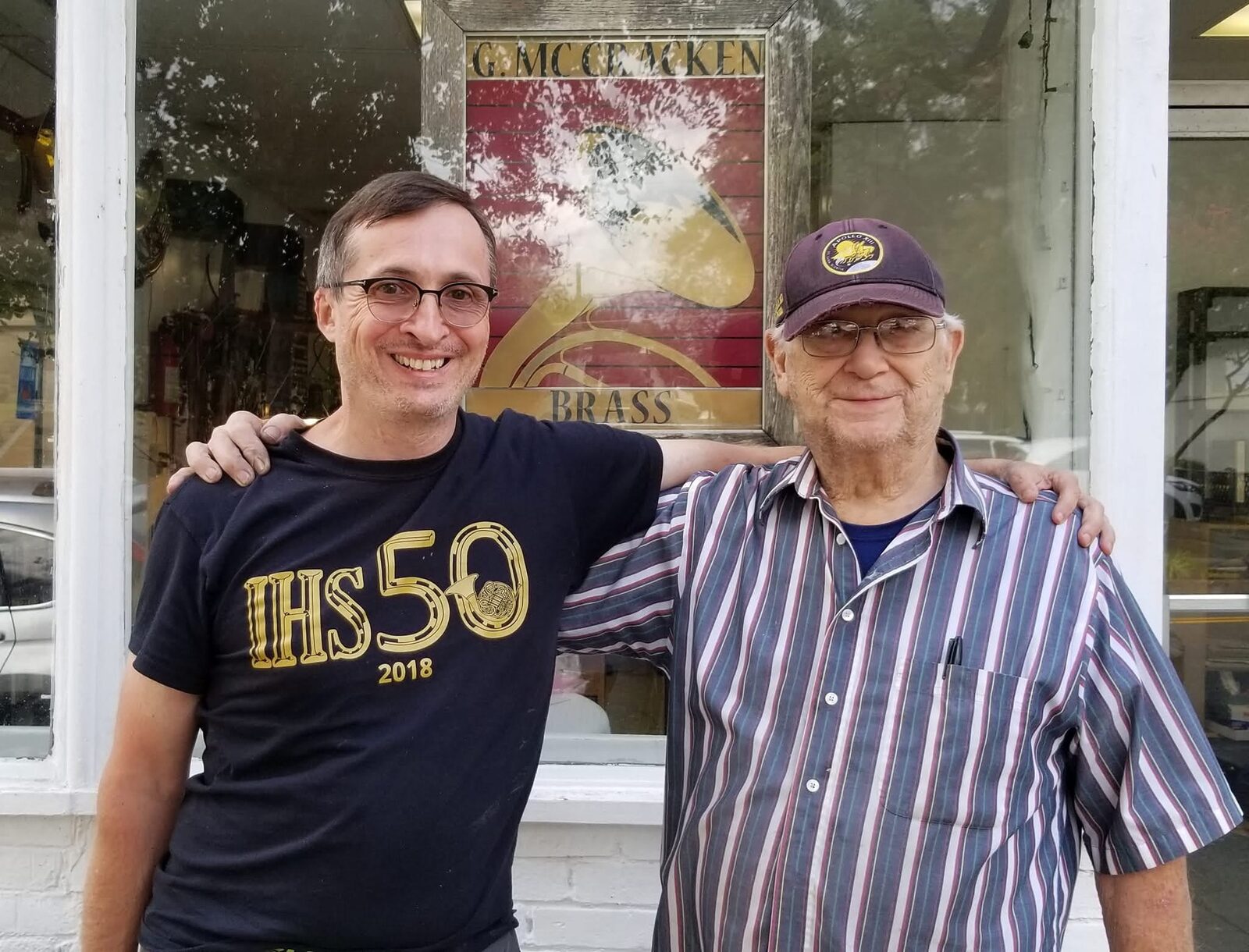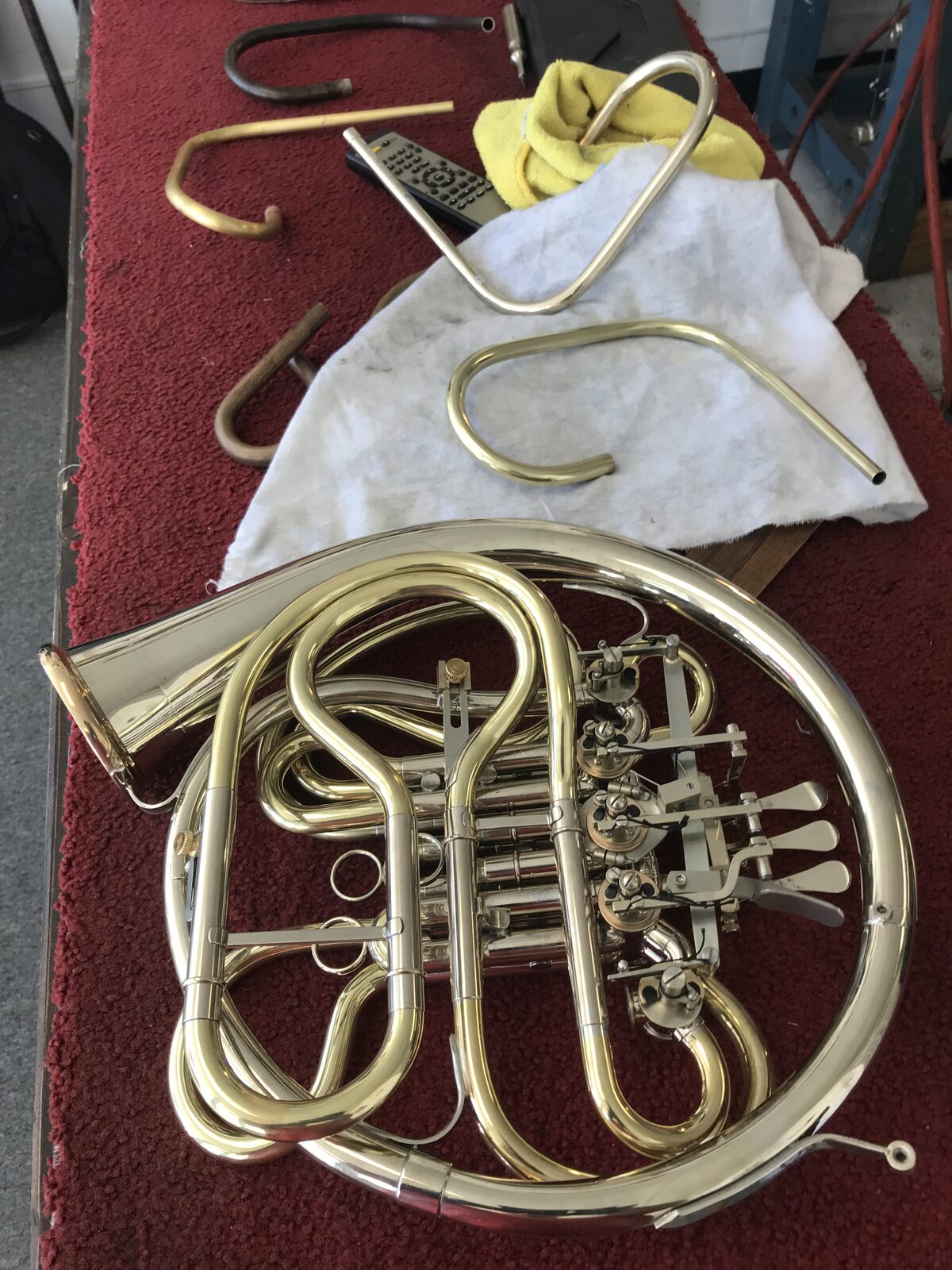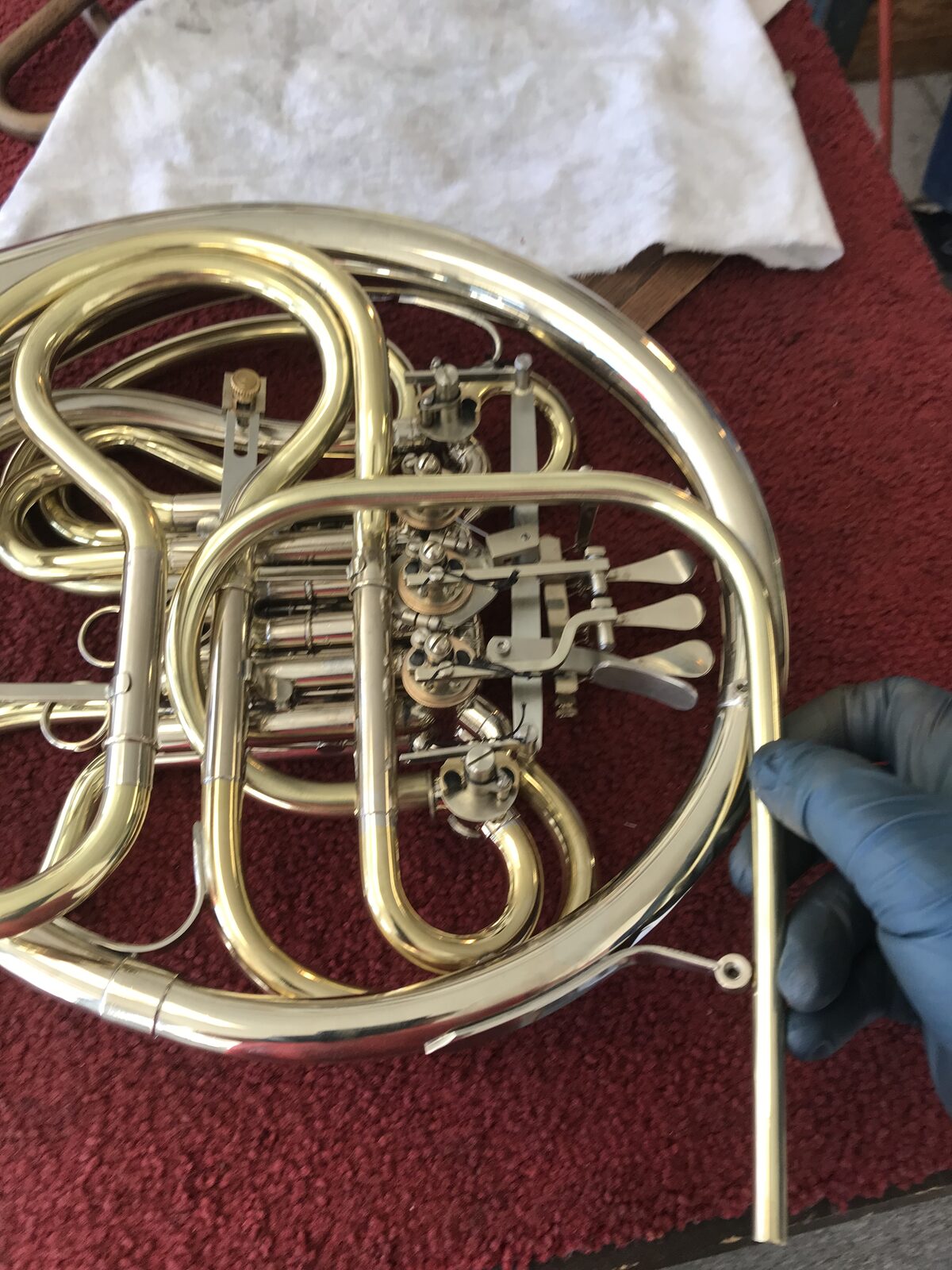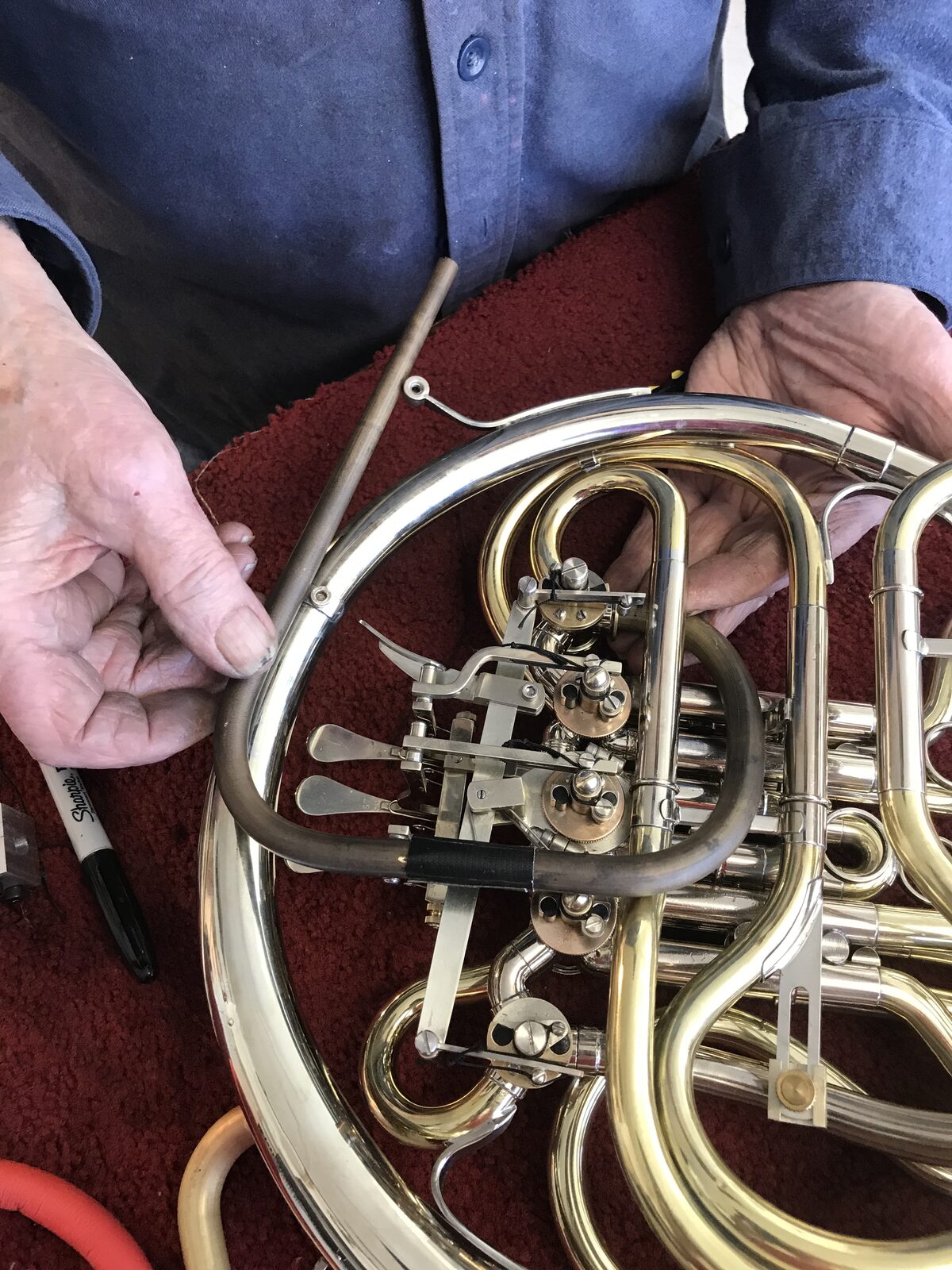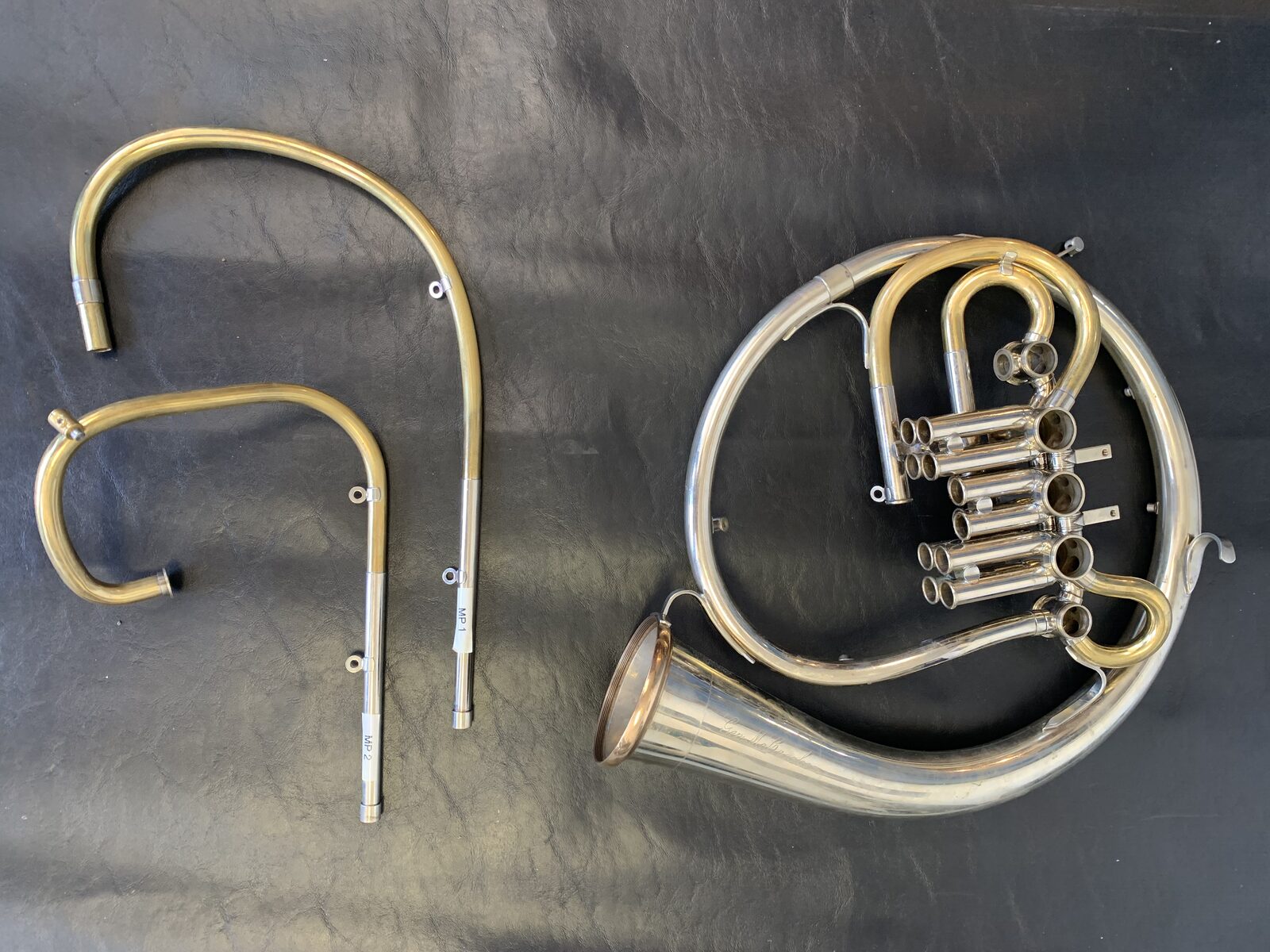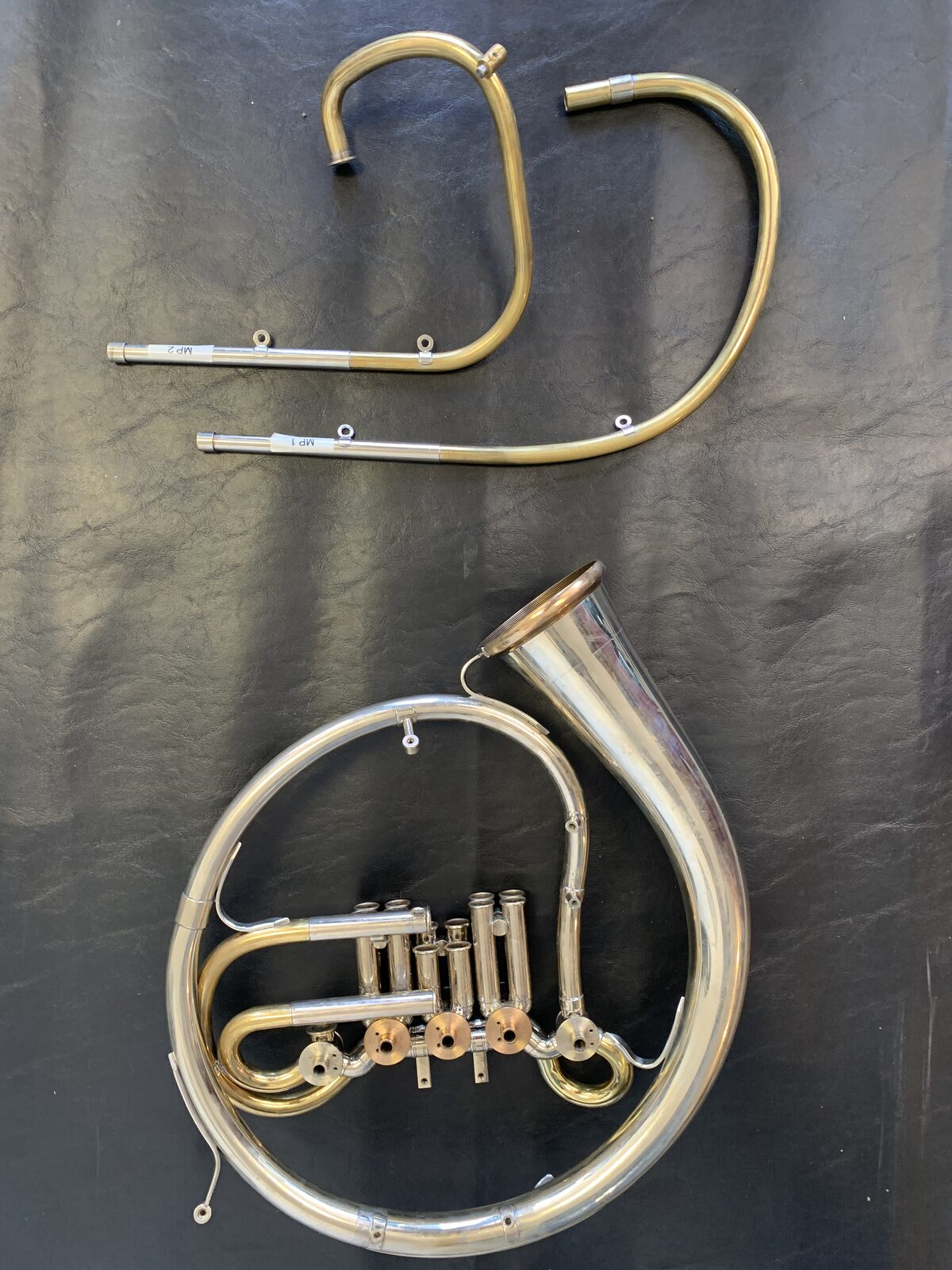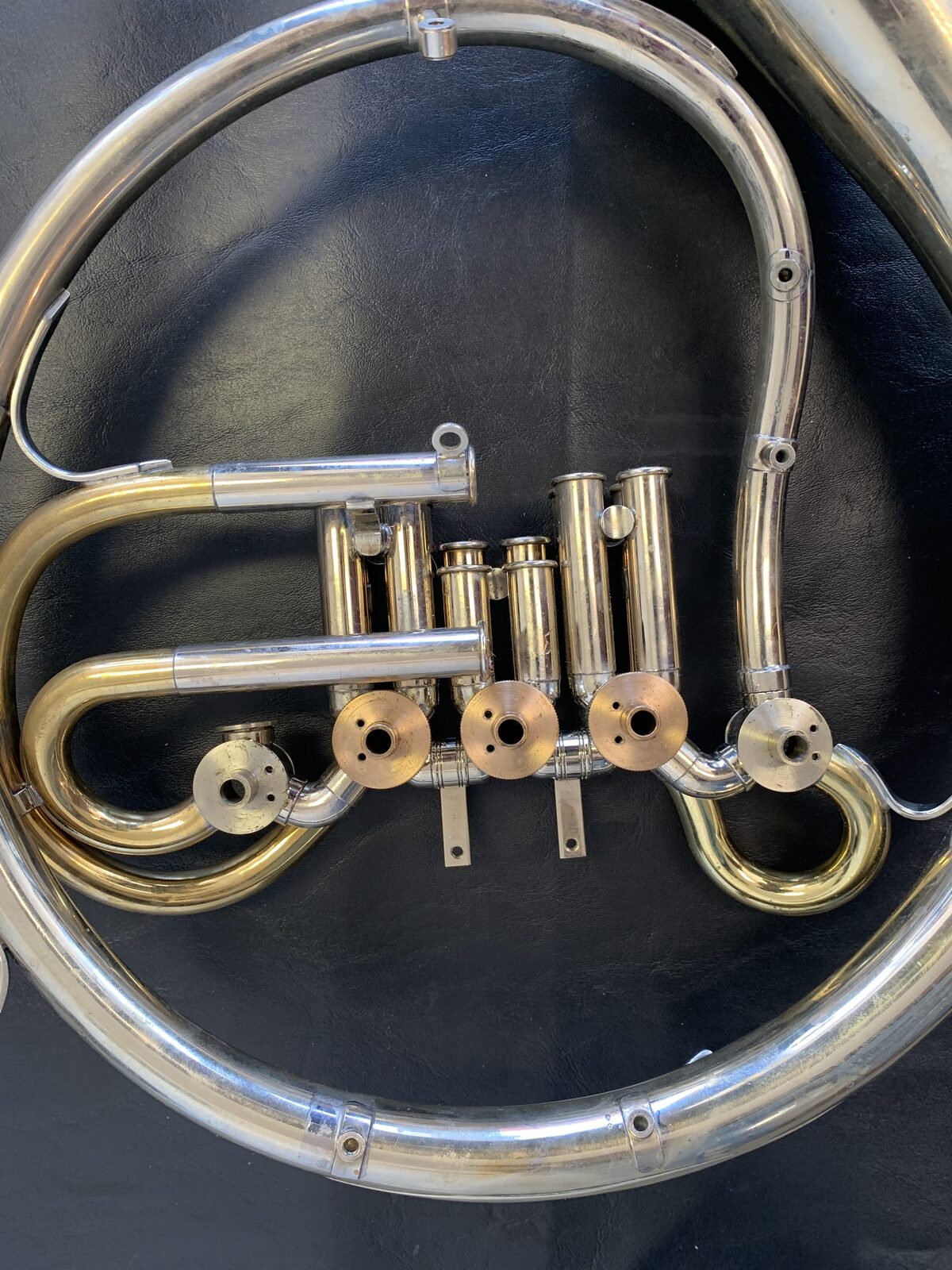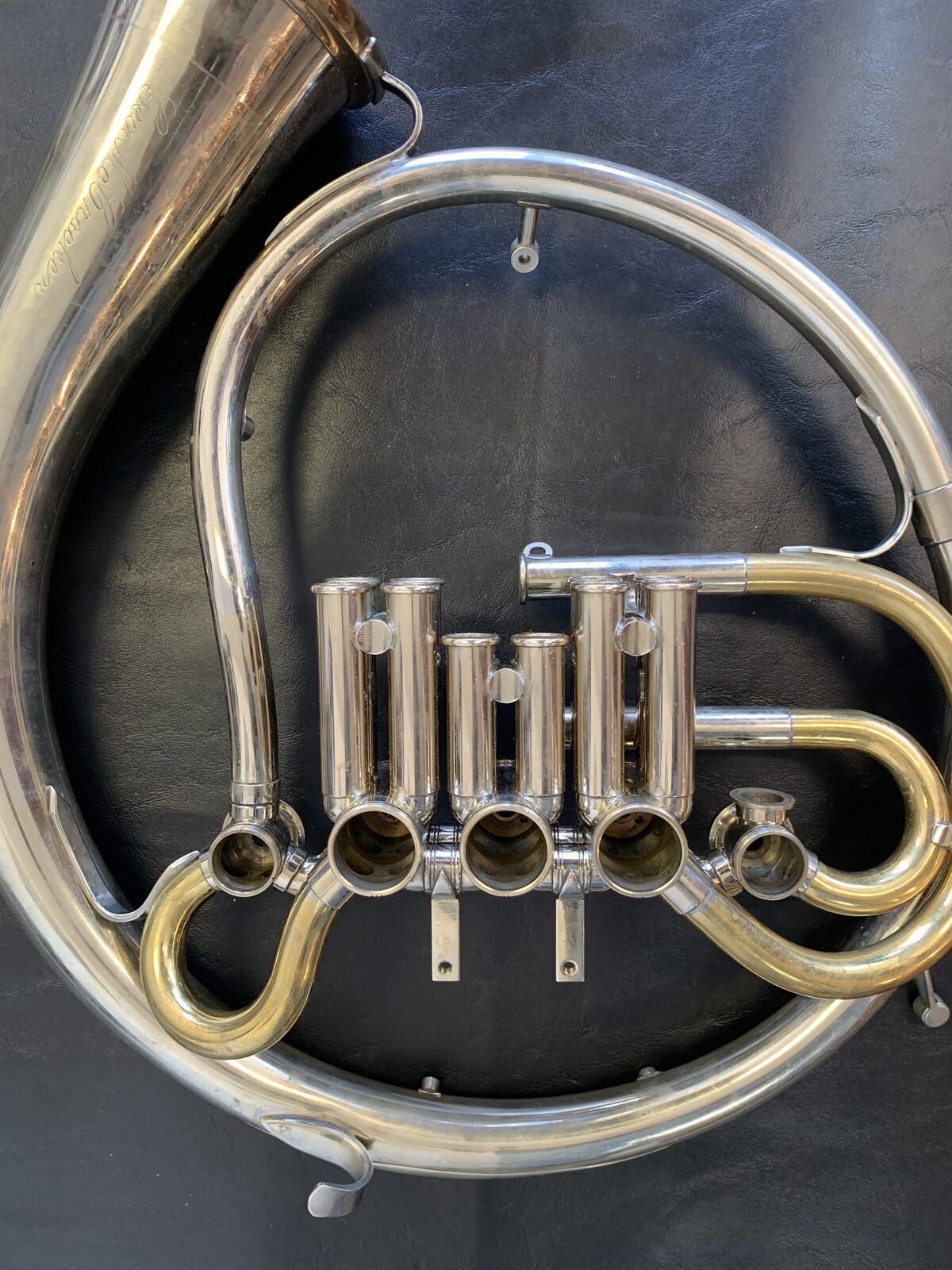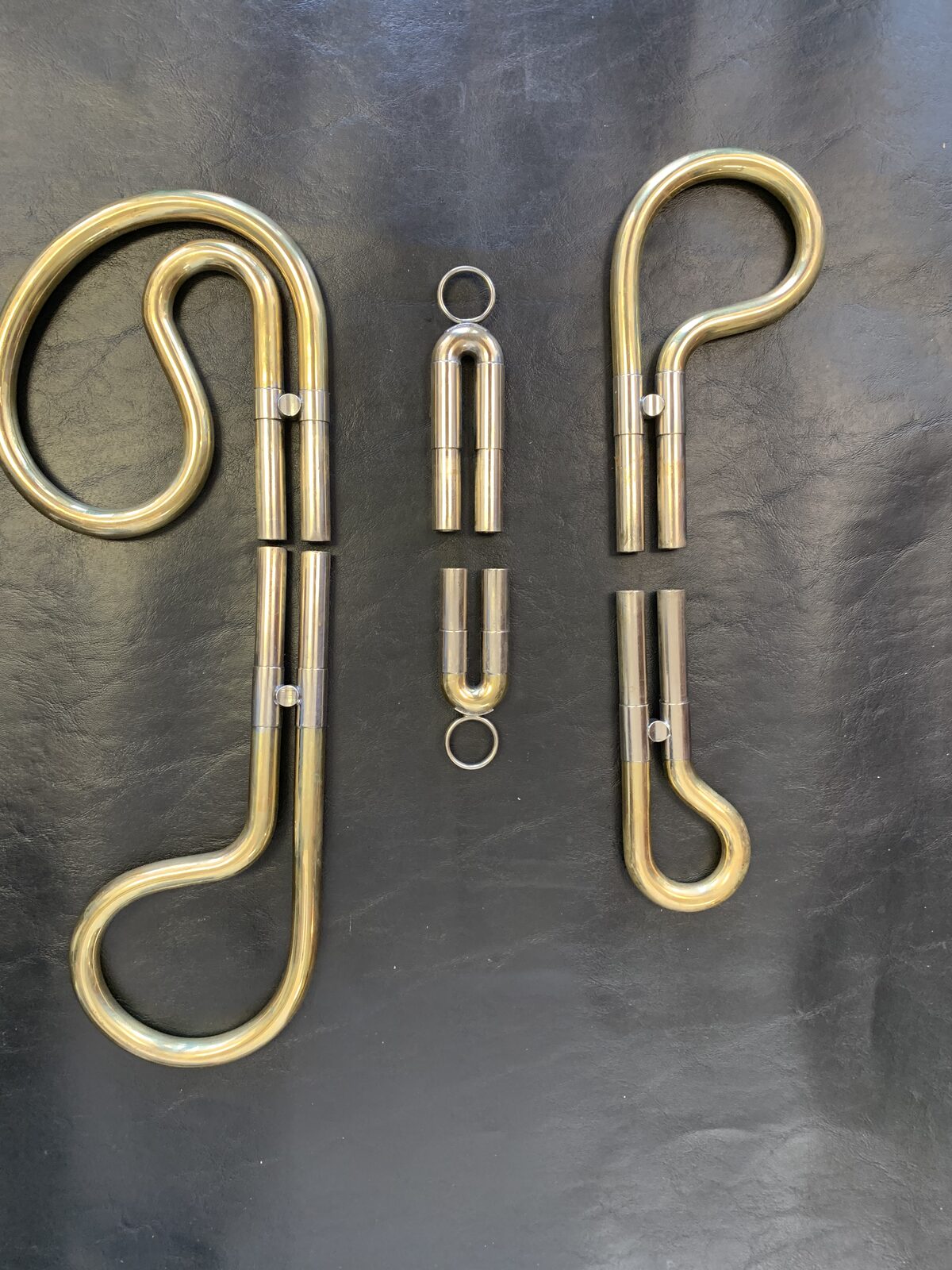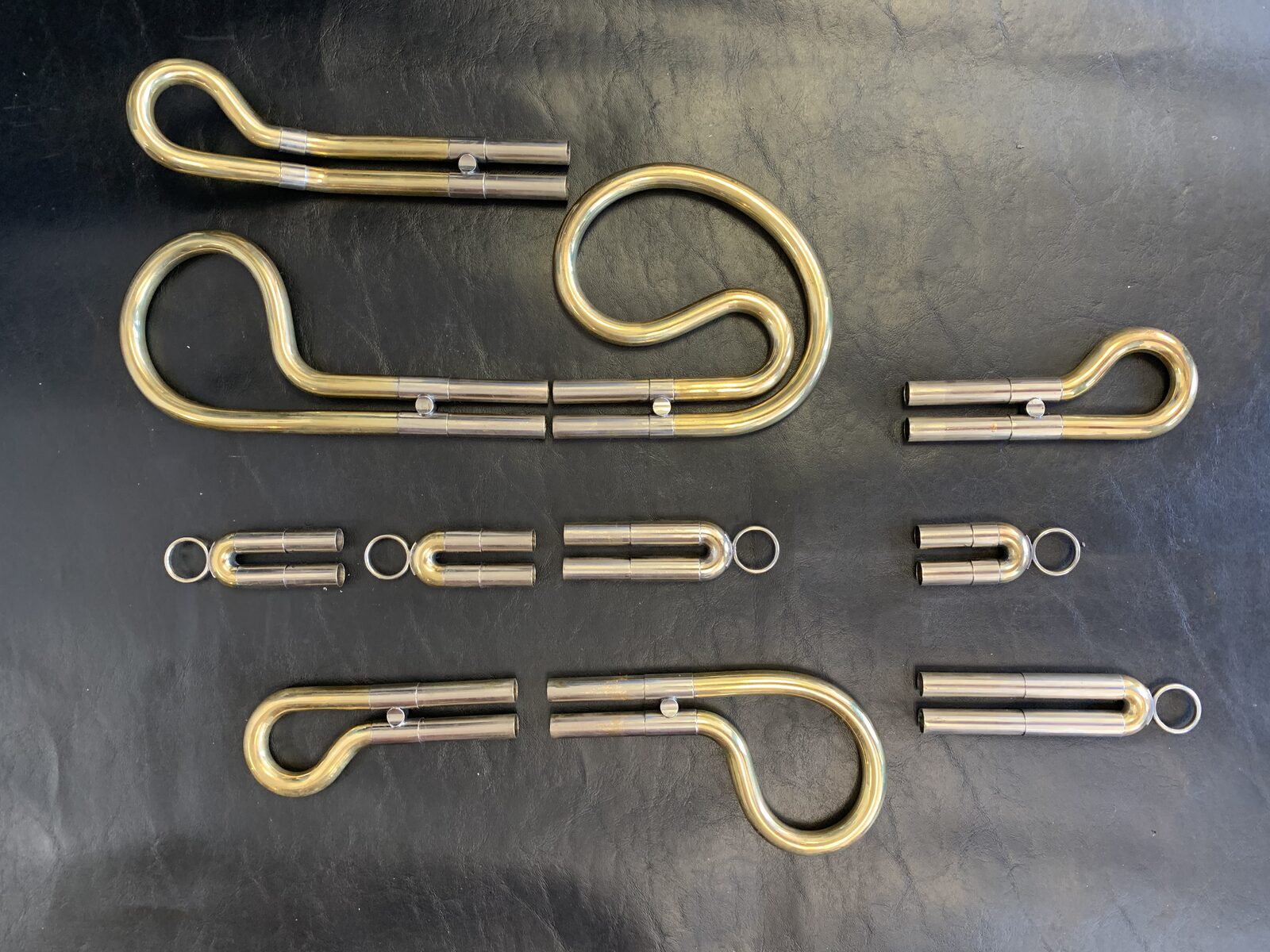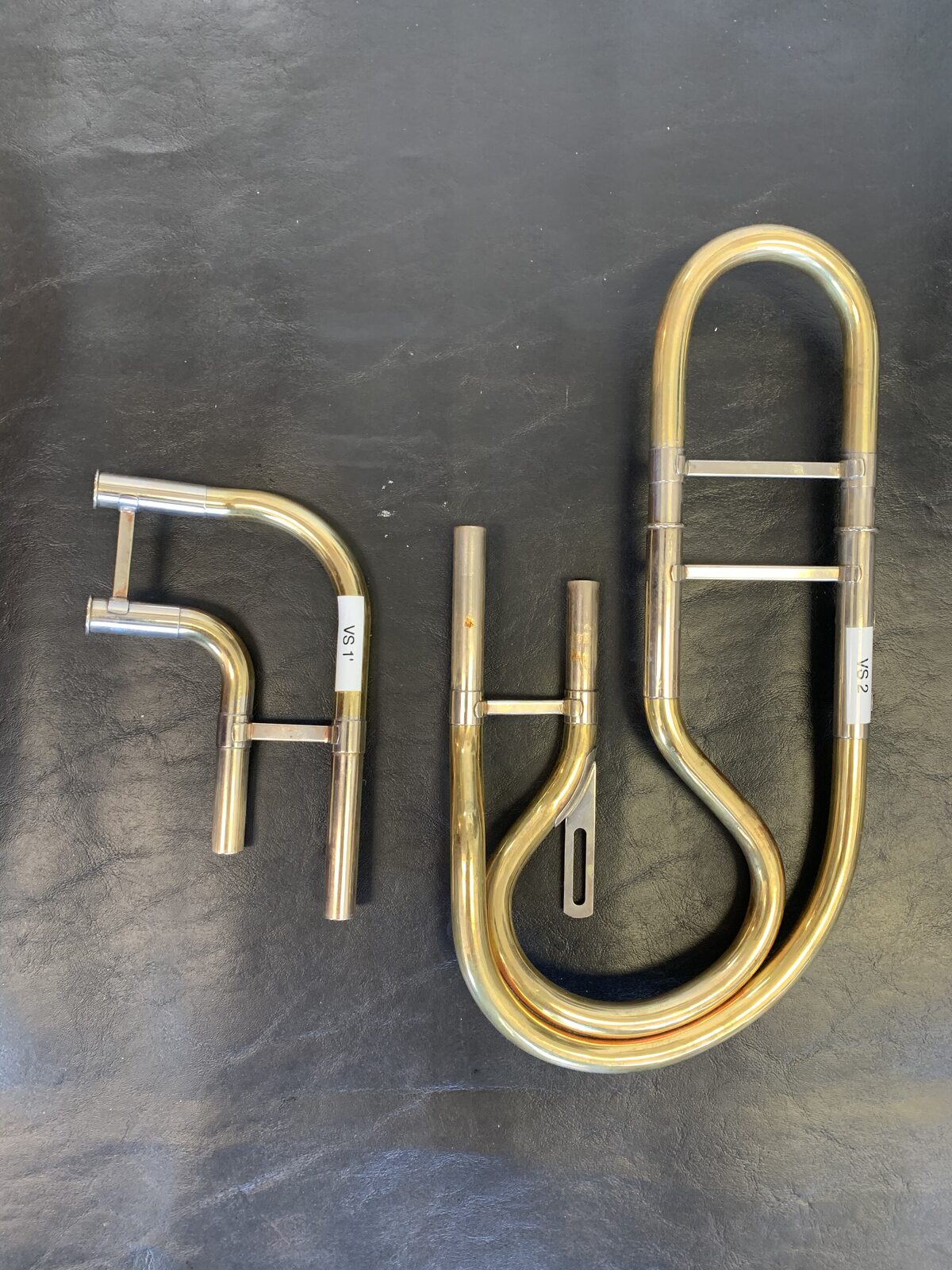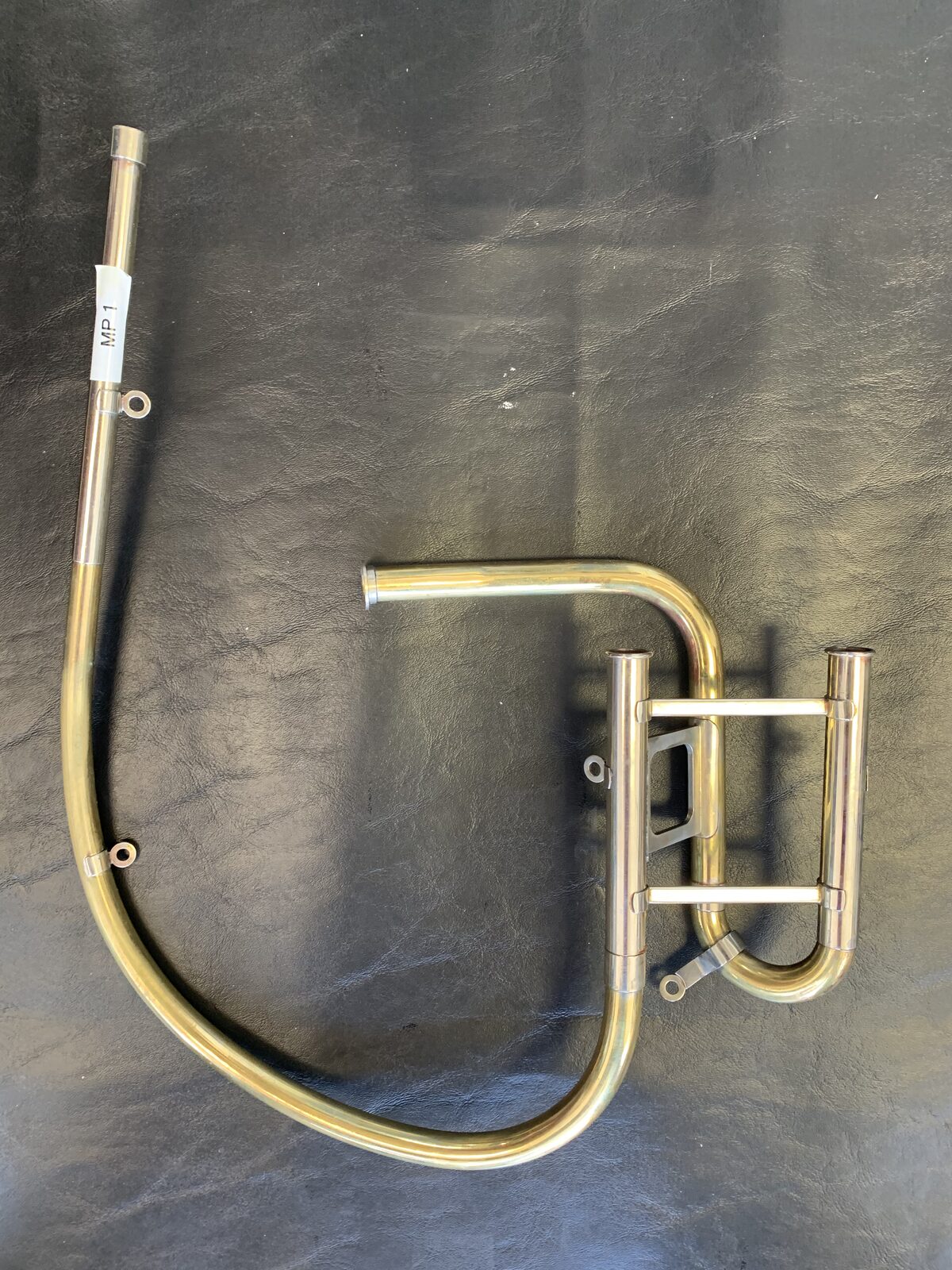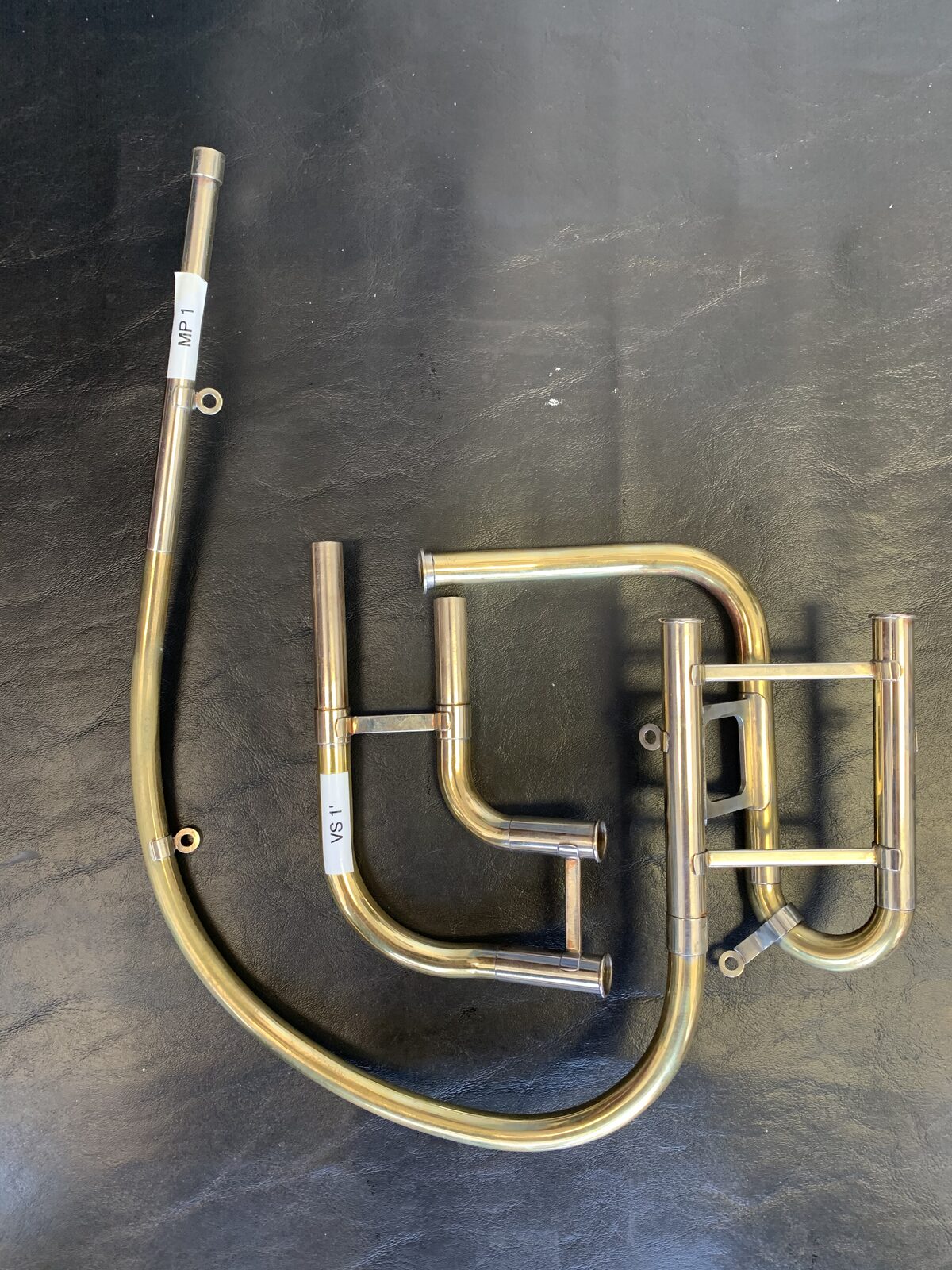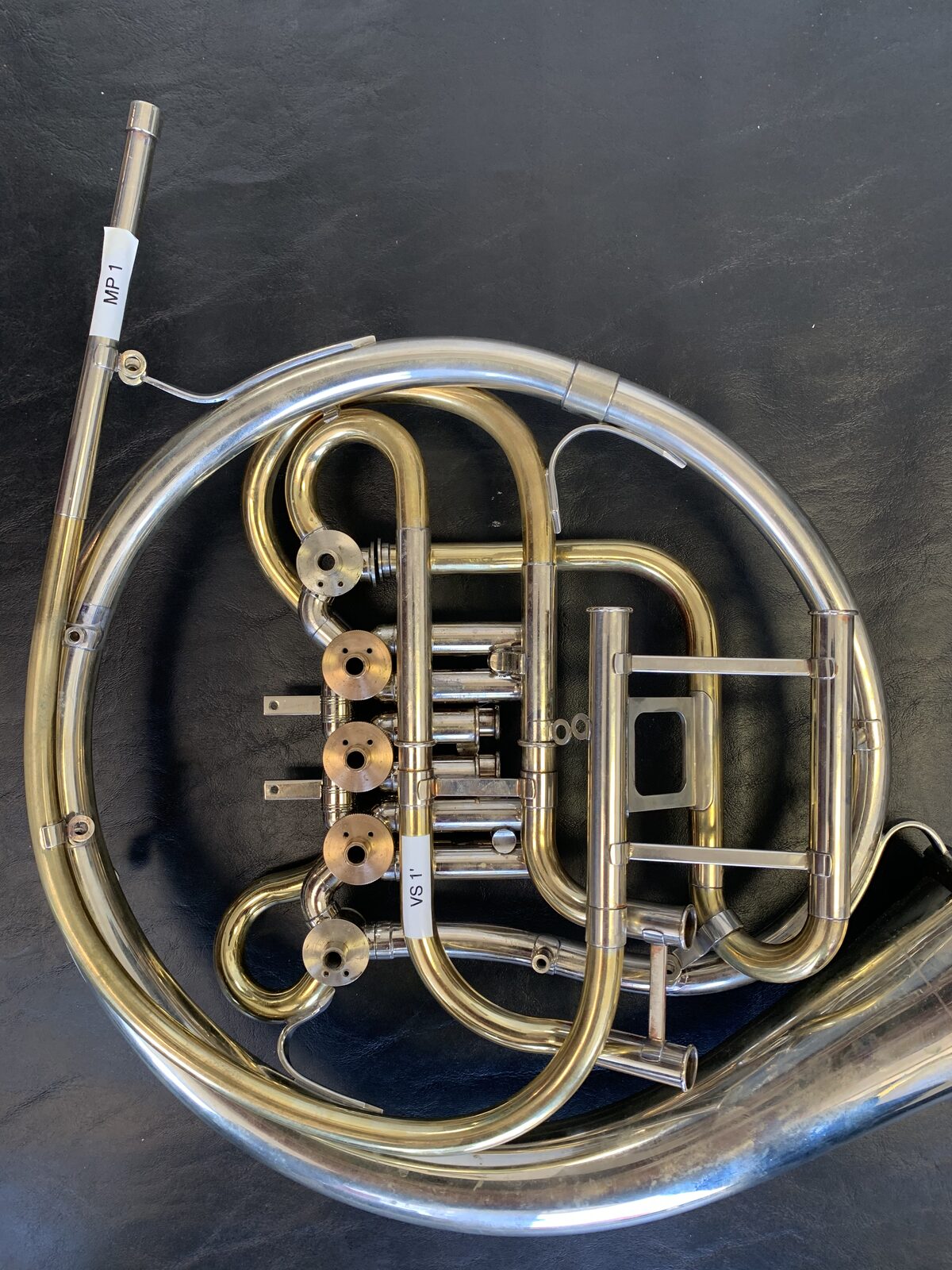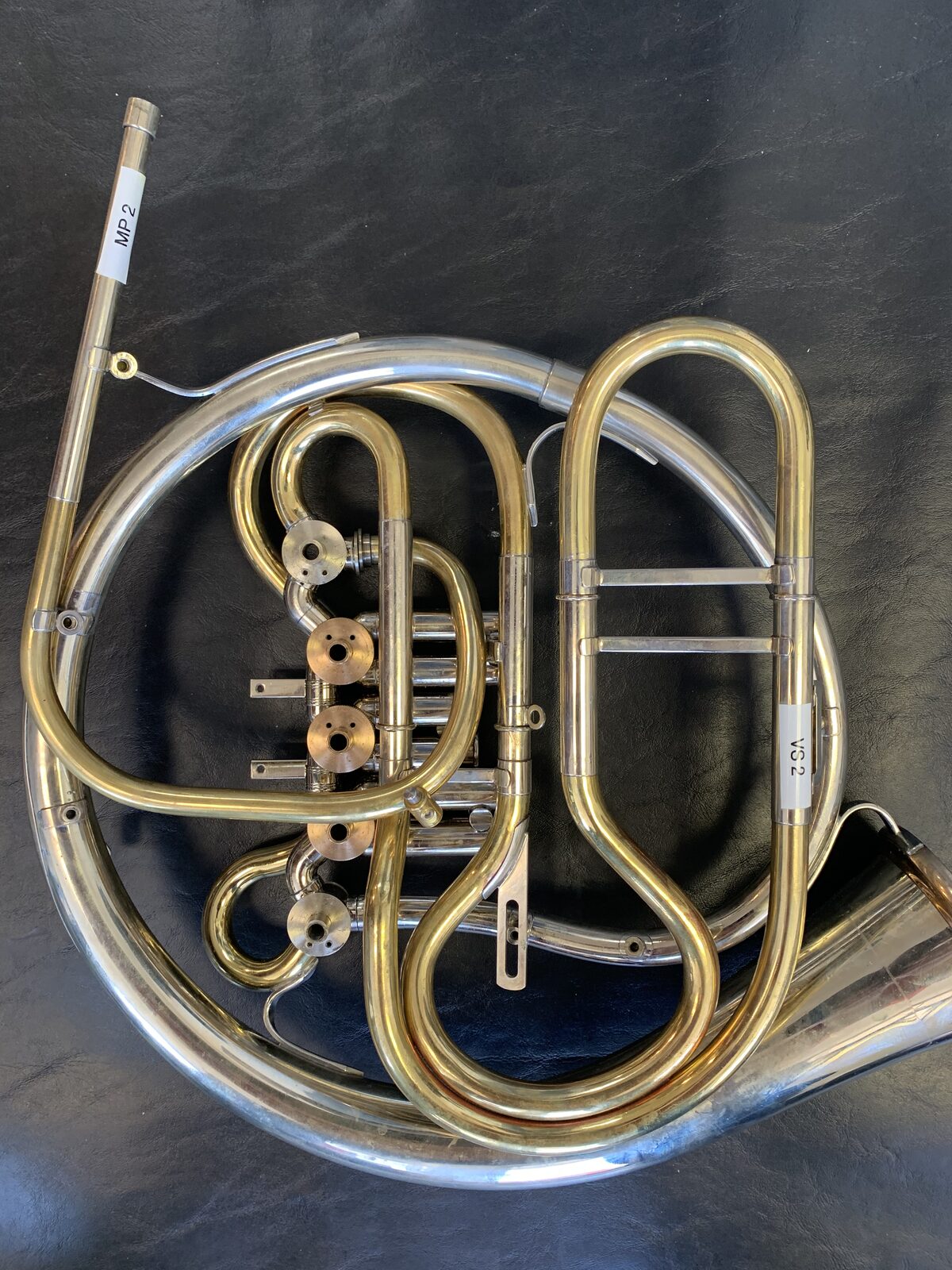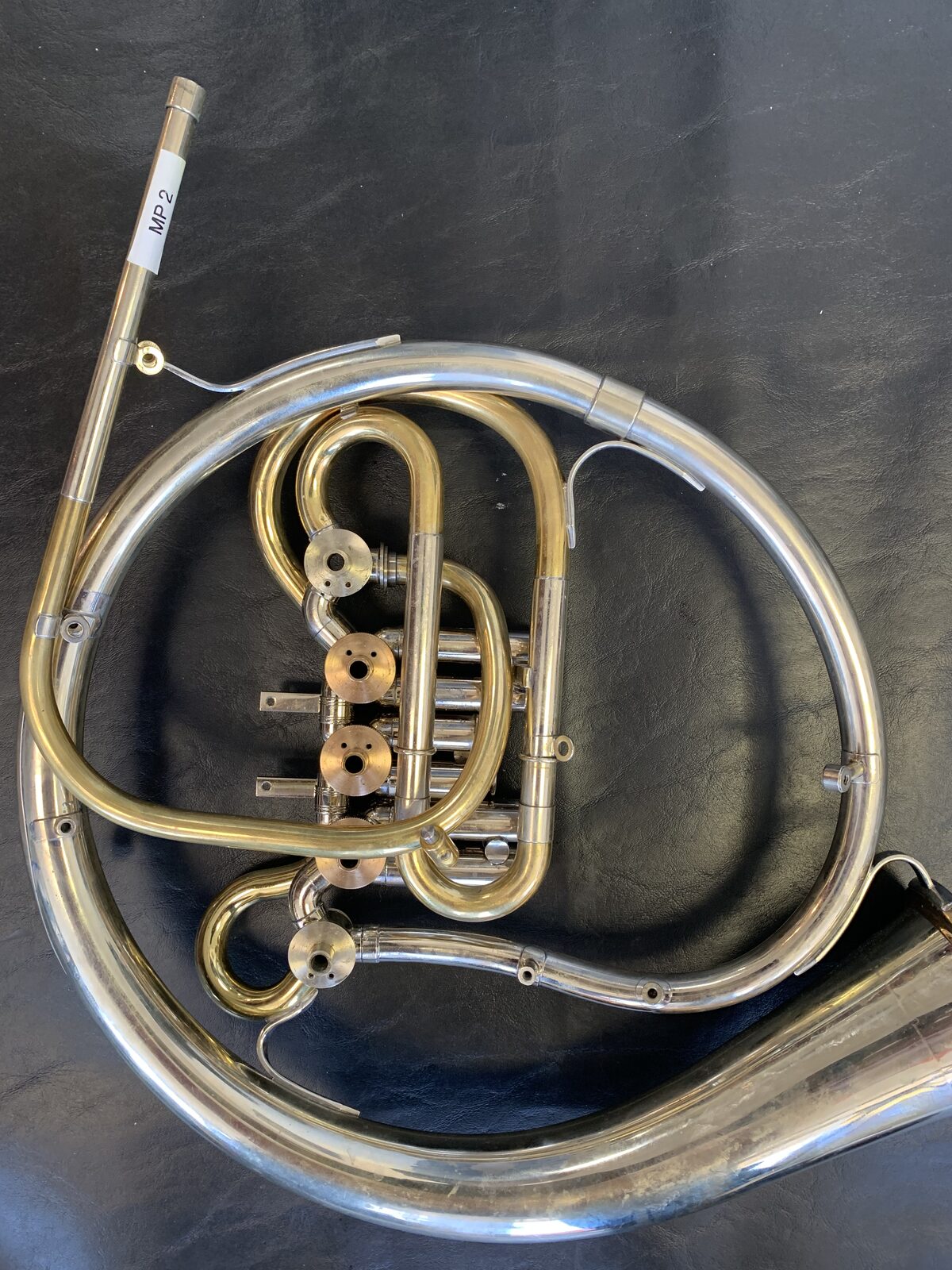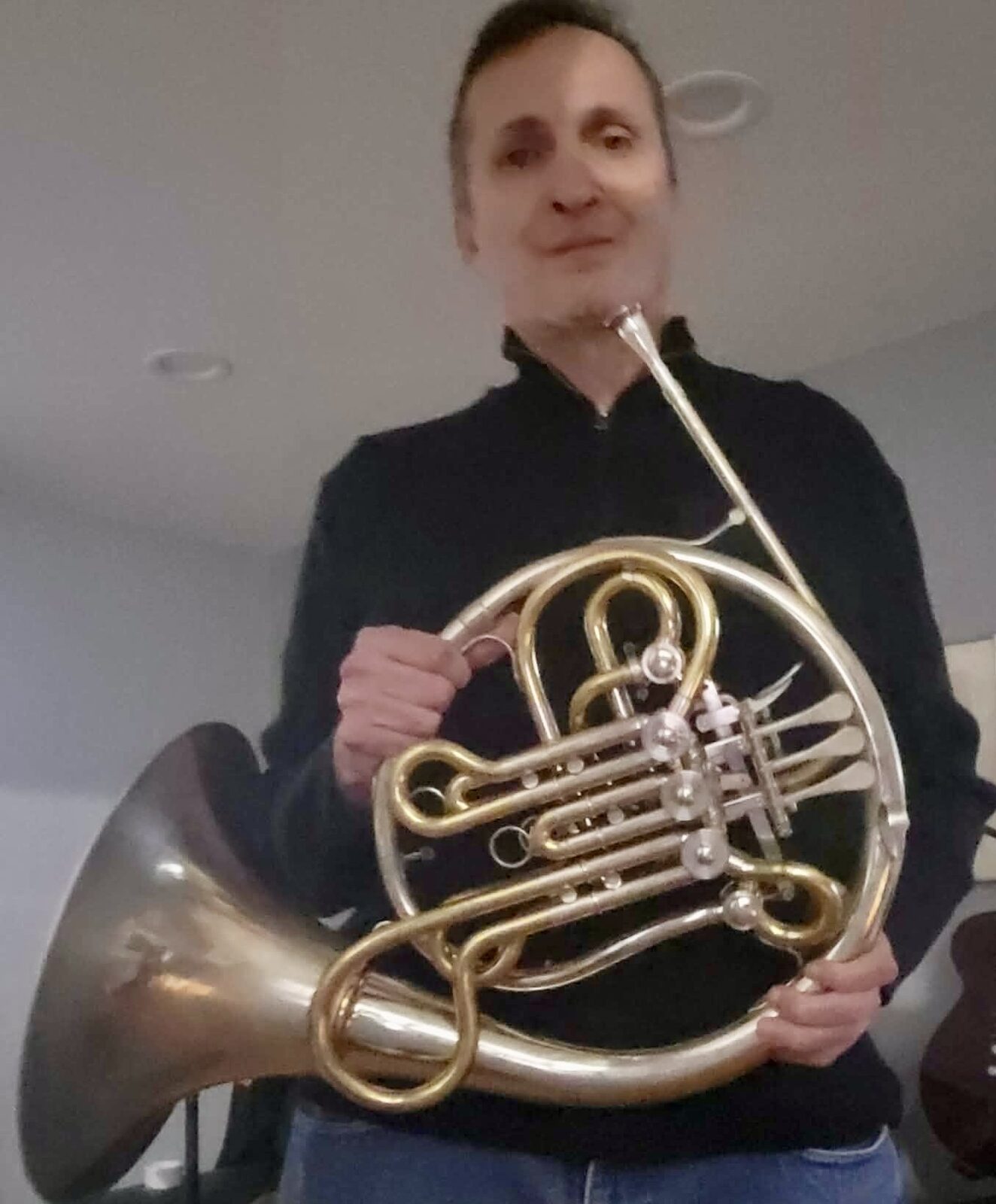
This was the last horn George McCracken ever finished.
What follows is Lou Denaro’s account of the instrument and how it came to be:
Prelude to the Convertible Horn Project
My relationship with George McCracken started in 2013 with customizations of horns within my C.F. Schmidt collection. He was completely unknown to me before this and my previous concept of George as an inaccessible guru broke down after repeated visits to his premises in West Point, Virginia, where I genuinely enjoyed hearing him delve through concepts in his classic mid-Atlantic accent. The idea of his being an old-school engineer willing to experiment to get what we both wanted is what opened me up to seeking further projects.
The Convertible Horn Project
After years of trying to balance corporate life and orchestra time, and being averse to the inherent compromises I perceived in triple horns, I saw a need for a light and easy-playing convertible double horn with which I could just show up and “do it all.” I confirmed that George would be amenable to building such a horn by phone before driving down to West Point to spec the project sometime in the spring of 2015. The concept of “flow” always seemed important to George, and it was at this meeting that he pulled some mechanical drawings together to demonstrate what he had in mind for this type of build, whereby we agreed on keeping the design as smooth as possible while employing whichever series of exchangeable slides of George’s own construction were needed to place the horn in F/Bb, Bb/Eb hoch, or F/Eb hoch.
George stated at this and subsequent meetings that any form of compromise would be singular; put another way, when going in any particular direction, his method was to scrap the proceedings altogether if more than one concession was involved. True to his word, what he eventually came up with was a dual change-valve setup of his own making that would hopefully produce less in the way of acoustic compromise by allowing for fewer abrupt bends and more even flow in the distribution of tubing throughout the instrument in all three configurations.
Development
While pursuing other things with George, I would periodically check in on the course of this convertible horn until he finally called me in April 2019 to stop by and play-test what he had so far. It seemed wonderful while sitting in Bb/Eb hoch, which I trialed by means of the Bruckner 4 opening and the Franck Symphony solo. An afternoon session involved swapping out the Bb slides with F slides to place the horn in a seemingly smooth enough F/Eb hoch configuration that also produced unique phrasing and fingering challenges that we both realized would take some getting used to.
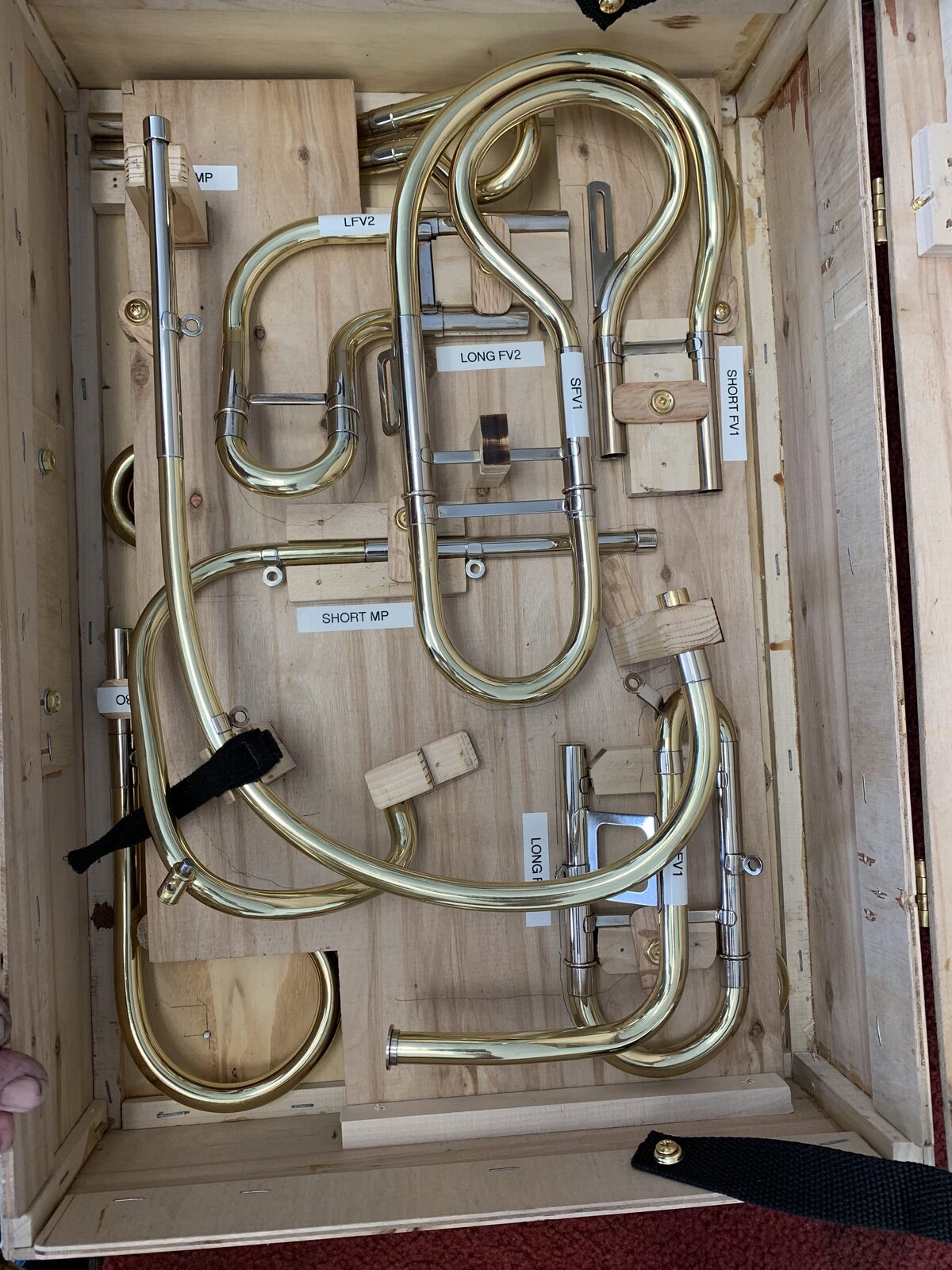
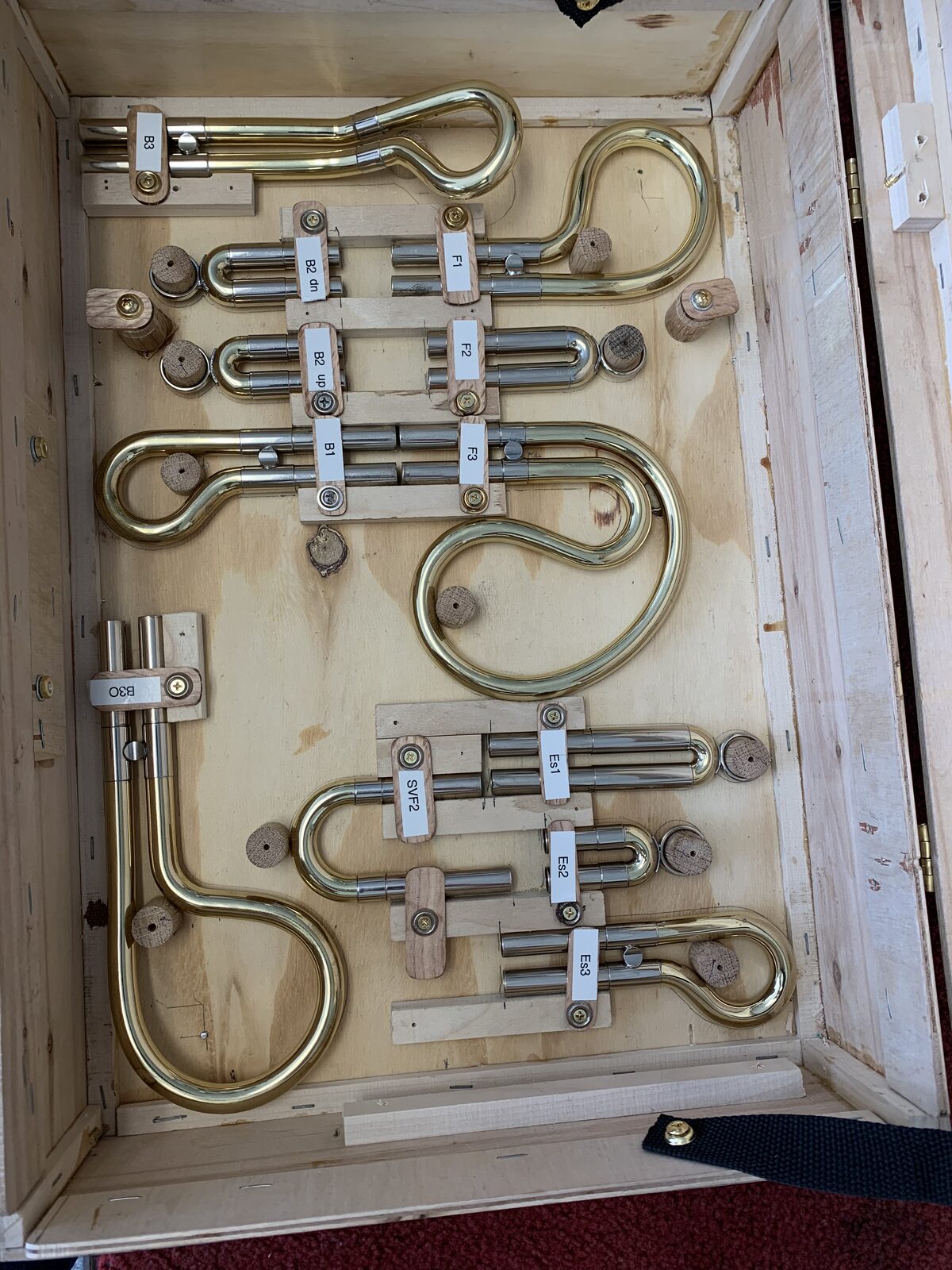
What I really remember about this session was that the horn seemed satisfactory enough that George asked if I was willing to accept it “as is” as opposed to pursuing a third configuration, standard F/Bb, but I told him to delay delivery until he accomplished the three configurations that would give us a true convertible horn. At that time I expected he might keep the Bb side as is, but that is not what happened at all. The system he eventually came up with involved swapping out the existing Bb slides in the positions where the Eb slides formerly went and thereafter building out yet another set of longer F slides to occupy the positions formerly held by the Bb slides. This also involved deriving a new mouthpipe of equal length but entirely different shape to drive the horn in F/Bb.
What happened months later, in what I think of as the purest moment within my relationship with George, is that he insisted he needed to build a case to logically handle all these components. No matter how I tried, begged, and explained how I felt capable of figuring which parts would go wherever for all three configurations via trial and error, he made me wait a week while he built a dual-level case that housed pretty much everything but the corpus and bell. What he came up with within that week, without the benefit of “beginning with the end in mind” because the parts were already constructed, is for me mind-boggling and a work of art unto itself.
Finished Product
The horn is comprised of a dual-row Paxman valve cluster accompanied by two rotary change valves built by George and team. It has a similar mouthpipe and the same bell and branch as the McCracken Model 7. The rest of the horn is a unique design to accommodate the changeable configurations.
There is a very noticeable nearly 270-degree semicircular loop at the bottom of the valve cluster that I thought would certainly be a water trap, but on the contrary, and in keeping with the McCracken concept of “flow,” the quick removal of condensation via one counterclockwise rotation of the bell could not be easier.
Both mouthpipes have screw connections in different locations, and I feel torque is definitely an issue. Whenever I change pipes, I spend time tightening these screws in equal measure to keep those pipes from being improperly stressed.
George told me more than once that this project changed his approach to horn building late in life. While I am not sure what that means, I am aware that some people loved the horn in F/Bb and asked for similar builds from George and Doug. My own feeling is that this project was primarily about getting a really fine Bb/Eb hoch large-throat screw-bell horn, adding cylindrical tubes to build out the Bb side to a fourth below for the F/Eb hoch configuration, and repurposing a lot of that while rearranging and adding more cylindrical tubing and an entirely new mouthpipe to get the F/Bb configuration.
For me, and others, the Eb side, with 21 inches of mouthpipe taper fastened directly to the first change valve, is easily the best-playing feature of this horn because it produces a sound strong, flexible, and horn-like enough to simplify a multitude of musical situations.
How the Horn Plays
This is a large-throat nickel-silver build with plenty in the way of mouthpiece taper. There is always a generous amount of sound and projection with this horn that feels good in the hands. Power to weight feels right, and there is no sense of real energy loss after consistent hard playing. The high Eb horn seems usable all over the instrument with a similar sound, projection, and release to what is found on the other sides of the horn. What I really like especially about the Eb side is the facility in rapidly placing notes within the vertical plane and the unusual presence and centering of sound on the bell for a large-throat flare.
I generally go out with the horn in Bb/Eb hoch and F/Eb hoch and would compare the sound to “big Paxman,” although an Elkhart bell will bring it into 8D territory, and the horn is mouthpiece sensitive as well. Within the past year I went through a very serious accident in which my left hand, left lung, ribs, scapula, and collarbone were all severely compromised. In that state, the McCracken Convertible is the one horn in my stable that I can seemingly play at all in regards to what is left of my left hand and lungs. In cases like that, I feel it is the horn, not the player. Although your mileage may vary, I feel this convertible horn is an unqualified success.
— LD